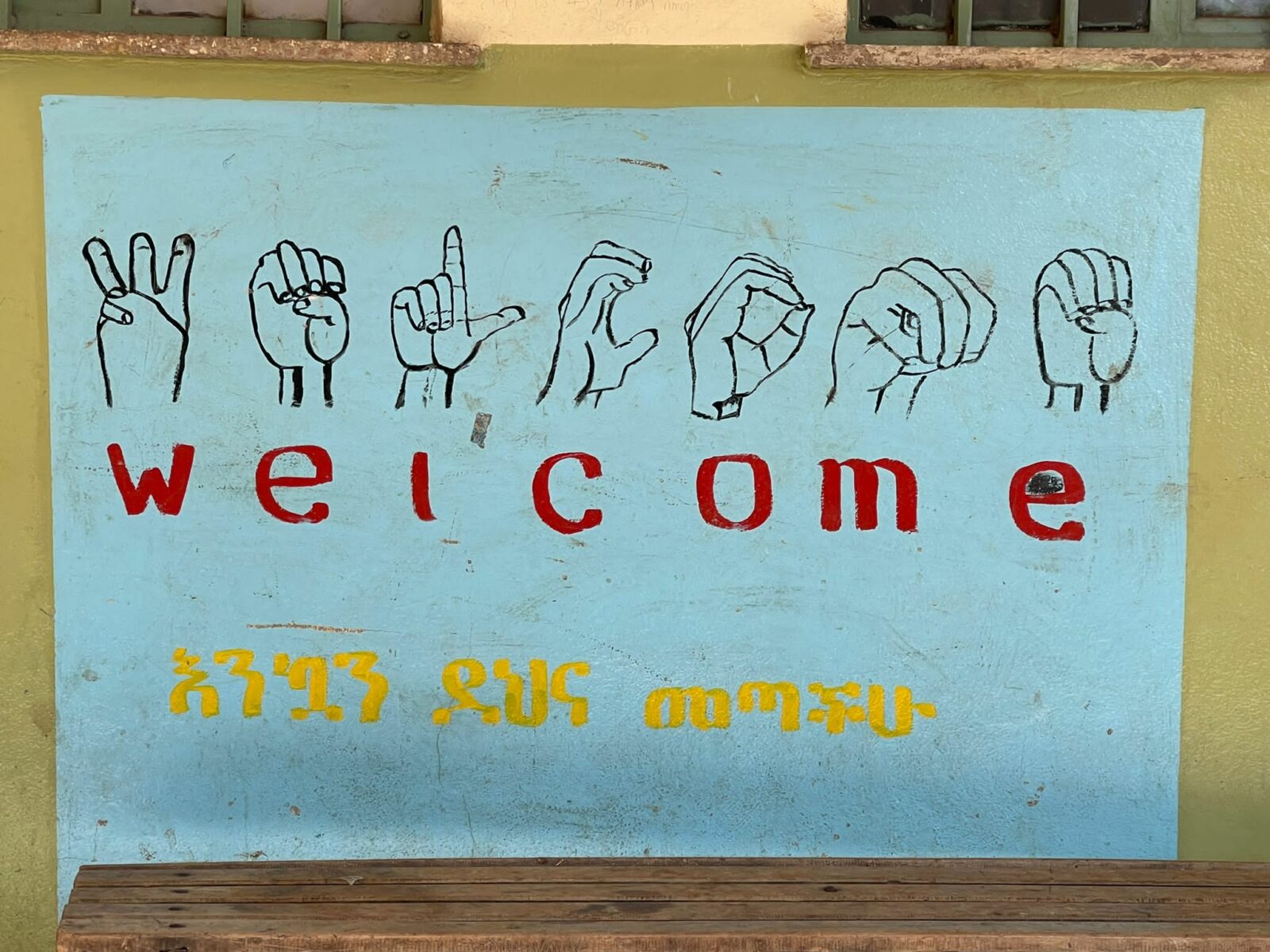



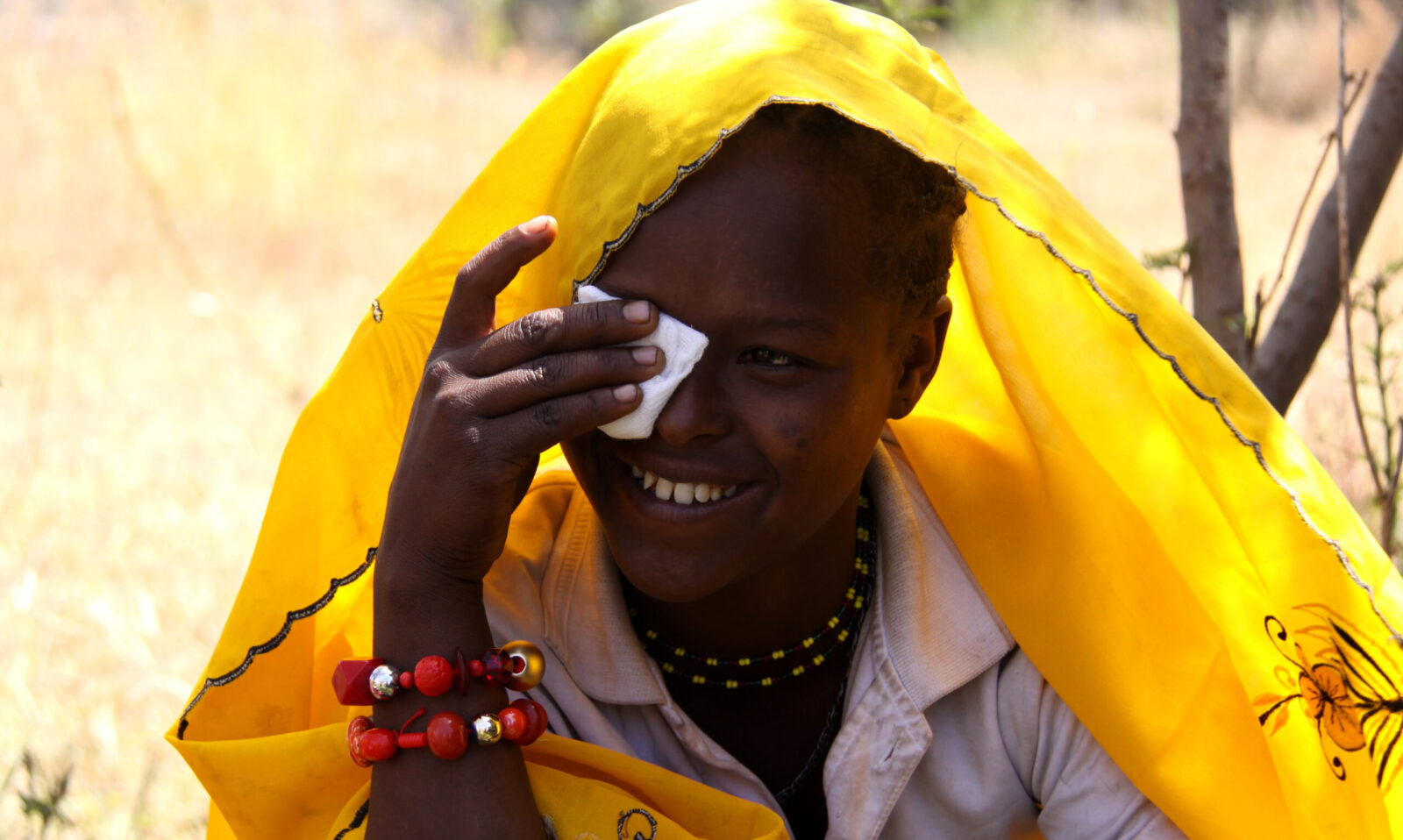
Inclusive eye care Ethiopia
Partner: GTM
Taking Action
Annual report SeeYou 2024
Foreword

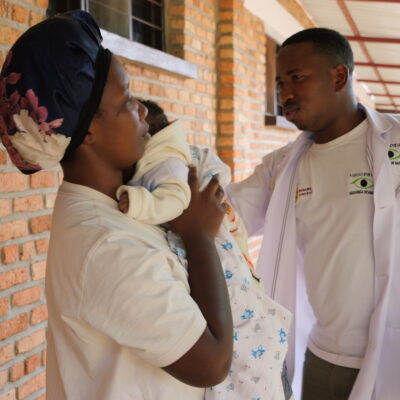
Foreword
Jolanda Omvlee
Injustice inspires me to take action, and I’ve had this motivation ever since I was a child. I would like to see every child, every person realise their potential and be able to thrive because each person is valuable and talented. I am absolutely convinced that each of us has something worthwhile to contribute. At SeeYou, this same conviction inspires us to strive to ensure dignity for persons with disabilities and to realise an inclusive world with local communities where everybody can participate. A world in which persons with a disability can also take action and advocate for their rights.
Unfortunately, in recent decades, I’ve seen in many countries just how much pain and distress are caused if persons with a disability are hidden away and live unseen. But that can change. In countries where people become blind on a daily basis, even though that could have been prevented, we want to bring hope. Together with our local partners, we work on sustainable solutions that provide help to individual people, but also their communities, so that we can make a lasting difference.
2024 was the year in which we also took action as an organisation. We started new projects, adopted a different organisational structure and welcomed new colleagues. It was also the year in which I had the privilege of succeeding Dicky Nieuwenhuis as the executive director. We are grateful to Dicky for all she has done for SeeYou over the past seven years, and we remain committed to realising a world in which everybody is valued.
This annual report showcases what we could achieve in 2024. However, this report is not about us. People are central to our work: persons with a disability, doctors, teachers and our partners. People like Alice, Ari, Mediatrice and Kasim, for whom we swing into action every day. We can make change possible thanks to everybody involved in our work, including donors, volunteers and partners!
With warm regards from all of us at SeeYou
1. Vision and mission
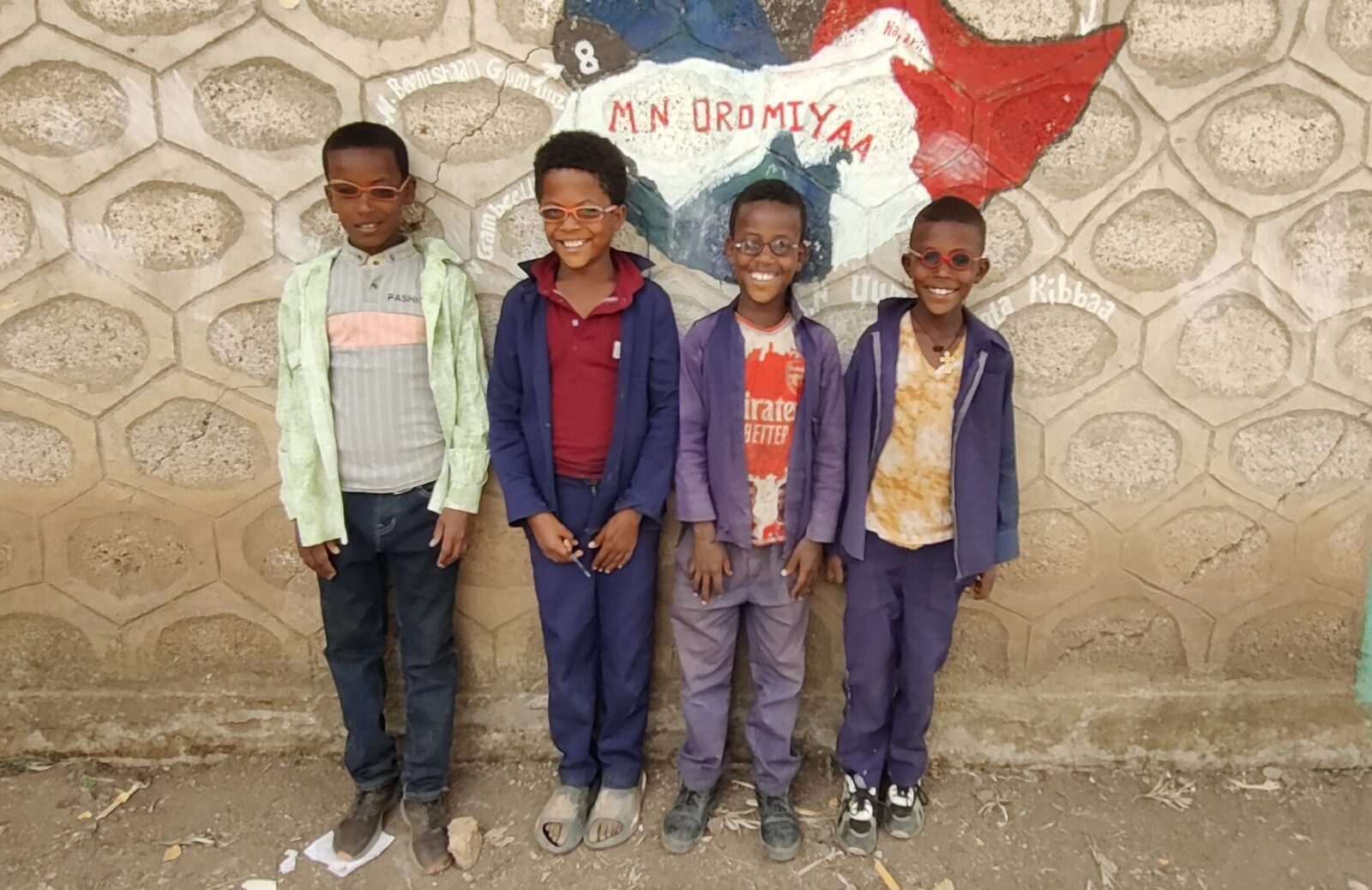
1
Vision and Mission
Our motiovation
Every human being is precious and valuable. So, it deeply concerns us when our fellow human beings with disabilities lack access to essential facilities and suffer injustice due to their disability.
Our mission
Equal access to eye care, health care, education and livelihood for children and adults with a disability in Africa and Asia.
We work in seven countries – Ethiopia, Rwanda, South Sudan, Sudan, Uganda, Cambodia and Indonesia – to prevent blindness, provide qualitatively good eye care and health care, food security and low-threshold education for persons with a disability, and we aim to realise inclusive communities as well.
We help persons with a (visual) disability to stand up for equal rights, and we assist advocacy groups in gaining a voice in their dealings with their governments. In the Netherlands, we also lobby for an inclusive development cooperation policy.
Our strategy
3 themes
Inclusive eye care
We work towards preventing eye diseases, diagnosing and treating eye conditions, and realising rehabilitation. We mainly do this in the poorer areas of Ethiopia, Rwanda and Indonesia.
Access to care, education and work
We want everybody to be fully integrated into society, and for persons with a visual or other disability to have equal access to healthcare, education and employment. We make sure that children with a disability can go to school, and we offer them guidance in finding employment after they finish school.
Equal rights
We help and empower persons with a disability and their advocacy organisations to stand up for their rights. And we challenge governments to meet the needs of persons with a disability.
7 core elements
We have one single focus: persons with a (visual) disability
In Africa and Asia, persons with a disability are almost always among the poorest of the poor. Within this group of people, we focus specifically on persons with a visual disability, children, and girls and women.
We share our knowledge
We share our 40 years of experience in helping persons with a (visual) disability with other development organisations. We strengthen partners through capacity building and help local and international organisations with developments in the area of inclusion.
We ensure honest and ethical behaviour
Our target group is at greater risk of being treated unequally, which is why we pay close attention to integrity. We want to ensure the safety of everyone involved in our projects and our organisation.
We give 85% of our income to projects
We want to devote 85% of every euro to projects for eyecare, inclusion and awareness. Then, each euro donated will have an even greater impact.
We work on the basis of equality with local organisations
We do not work alone and would not be able to achieve our goals if we did. We always work together with persons with a disability, the organisations that represent them, and eye clinics and civil society organisations rooted in the local community.
We work on the basis of Christian values
We believe that every person is precious and valuable. These are values we see reflected in the Bible, and they form the basis for our work. And they are the reason why we are committed to all persons with a disability, regardless of ethnicity, religion or other characteristics.
We see donors as our partners
We consider donors, companies, charitable trusts, and other donors to be strategic partners on a joint mission: to improve the quality of life of persons with a disability.
We have one single focus: persons with a (visual) disability
In Africa and Asia, persons with a disability are almost always among the poorest of the poor. Within this group of people, we focus specifically on persons with a visual disability, children, and girls and women.
We work on the basis of equality with local organisations
We do not work alone and would not be able to achieve our goals if we did. We always work together with persons with a disability, the organisations that represent them, and eye clinics and civil society organisations rooted in the local community.
We share our knowledge
We share our 40 years of experience in helping persons with a (visual) disability with other development organisations. We strengthen partners through capacity building and help local and international organisations with developments in the area of inclusion.
We work on the basis of Christian values
We believe that every person is precious and valuable. These are values we see reflected in the Bible, and they form the basis for our work. And they are the reason why we are committed to all persons with a disability, regardless of ethnicity, religion or other characteristics.
We ensure honest and ethical behaviour
Our target group is at greater risk of being treated unequally, which is why we pay close attention to integrity. We want to ensure the safety of everyone involved in our projects and our organisation.
We see donors as our partners
We consider donors, companies, charitable trusts, and other donors to be strategic partners on a joint mission: to improve the quality of life of persons with a disability.
We give 85% of our income to projects
We want to devote 85% of every euro to projects for eyecare, inclusion and awareness. Then, each euro donated will have an even greater impact.
Read the full version of ou strategy (in English). (externe link)
Last year, we took the first steps toward developing a new strategy. In June 2025, we will roll out our new strategy for the period 2026-2030.
Our pathway to change
If we
- support children and adults in Africa and Asia with a (visual) disability with (eye) care, education and work;
- make care institutions, schools, companies and governments more accessible;
- encourage persons with a disability, their advocacy groups and their community to stand up for equal treatment;
then children and adults with a disability
- will be valued and heard by their family, community and the society they live in;
- have better and more equal access to essential facilities;
- experience fewer barriers in their lives;
so that
persons with a (visual) disability in Africa and Asia receive equal treatment and experience a better quality of life.
Project countries and partner organisations
| Program | Project | Country | Partner |
|---|---|---|---|
| SeeYou Eye Health | Inclusive eye care Rwanda | Rwanda | Kabgayi Eye Unit (KEU) |
| Inclusive eye care Ethiopia | Ethiopia | Grarbet Thehadiso Mahber (GTM) | |
| Inclusive eye care Indonesia | Indonesia | CBM-G Indonesia | |
| Digital Access | Ethiopia | Ethiopian Centre for Disability and Development (ECDD) | |
| SeeYou Cares | Every Life Matters | Rwanda | The Umbrella of Organisations of Persons with Disabilities in the Fight against HIV/AIDS & for Health Promotion (UPHLS) |
| Every Life Matters | Indonesia | Pusat Rehabilitasi YAKKUM (PRY) | |
| Every Life Matters | Ethiopia | Ethiopian Centre for Disability and Development (ECDD) | |
| SeeYou Learns | Inclusive education Cambodia | Cambodia | People’s Action for Inclusive Development (Pafid) / Krousar Thmey (KT) |
| Learning Unlocked | Indonesia | Pusat Rehabilitasi YAKKUM (PRY) | |
| SeeYou Learns Rwanda | Rwanda | Ubumwe Community Center (UCC) | |
| SeeYou Rights | We are Able! | Uganda | Light for the world Uganda |
| We are Able! | South Sudan | Light for the world South Sudan | |
| We are Able! | Sudan | Action on Disability and Development (ADD) | |
| We are Able! | The Netherlands | Dutch Coalition on Disability and Development (DCDD) | |
| MUB-project | Rwanda | The Umbrella of Organisations of Persons with Disabilities in the Fight against HIV/AIDS & for Health Promotion (UPHLS) / Rwanda National Union of the Deaf (RNUD) | |
| Inclusive villages | Indonesia | People’s Action for Inclusive Development (Pafid) / Pusat Rehabilitasi YAKKUM (PRY) | |
| SeeYou Works | Employable | Rwanda | Umuryango Nyarwanda w’Abagore Bafite Ubumuga (UNABU) |
2. Impact
2
Impact
Every human being is precious and valuable. Therefore, at SeeYou, our goal is to improve the quality of life of persons with a disability. We do this by working to realise equal access to care, education and work. Here are several highlights of what we achieved together in 2024, including all the donors concerned and our local partners. These highlights from 2024 illustrate what we were able to achieve with the help of all our donors and our local partners.
104483
eye screenings
17685
eye care treatments
4435
people trained to carry out eye screenings
Healthcare for
11104
persons with a disability
Inclusive education for
469
children with a disability
Vocational education training for
491
young persons with a disability
519
people trained as a Disability Rights advocate
134
organisations for persons with a disability strengthened
Trained advocates per type of disability
 |  |  |  |  |  | ||
|---|---|---|---|---|---|---|---|
| Visual | Hearing | Physical | Mental | Multiple | Other | Total | |
| Women | 56 | 37 | 58 | 38 | 30 | 18 | 237 |
| Men | 72 | 43 | 71 | 29 | 26 | 41 | 282 |
| Total | 128 | 80 | 129 | 67 | 56 | 59 | 519 |
Members of advocacy organisations per type of disability
| | | | | | ||
|---|---|---|---|---|---|---|---|
| Visual | Hearing | Physical | Mental | Miltiple | Other | Total | |
| Women | 281 | 128 | 394 | 214 | 113 | 76 | 1206 |
| Men | 230 | 115 | 206 | 325 | 59 | 52 | 987 |
| Total | 511 | 243 | 600 | 539 | 172 | 128 | 2193 |
3. SeeYou Eye Health
3
SeeYou Eye Health
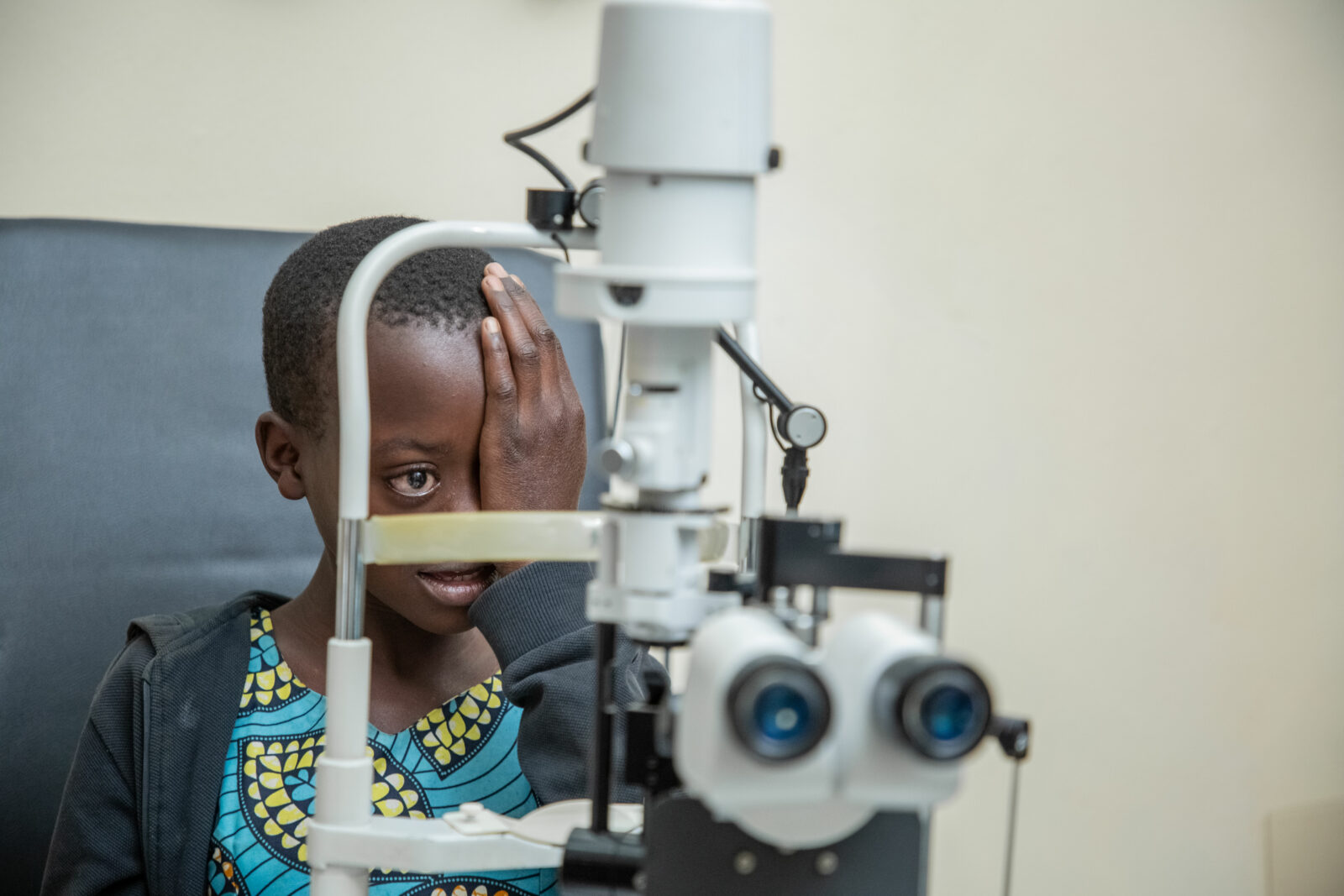
With our projects, we want to make eye care accessible to everybody and improve the quality of eye care as well. We work on prevention, diagnosis and treatment by providing information about eye diseases, qualitative medical equipment and thorough training.
17.685 eye care treatments including:
3986
eye operations
5043
people received a pair of glasses or other visual aids
8656
other eyecare treatments, such as treating eye infections
New! I-SEE project on Java
Indonesia
Indonesia has a good national eyecare policy. Nevertheless, in smaller villages, there is little knowledge about eyecare and the possibilities for preventing and treating eye diseases. Together with CBM-Global Indonesia, we have therefore started this three-year project in three districts on East Java.
The existing healthcare services, local communities and local governments all play an active role in preventative eyecare and improving access to eyecare for persons with a disability. Consequently, the intensive collaboration of the parties involved is this project’s main strength and safeguards its continuation once we leave.
- We are teaching volunteers and teachers how to carry out an eye screening for people in their community or school students. With timely eye screenings, we can prevent absence from school by providing schoolchildren with a pair of glasses, other visual aids or further screenings.
- Journalists influence public awareness about eye care. We therefore provided information about eyecare to 30 journalists, who subsequently produced publications about the importance of eyecare and this project.
This project has been funded for the first year and we are actively looking for funding for the next two years.
Trachoma does not have to result in blindness
Ethiopia
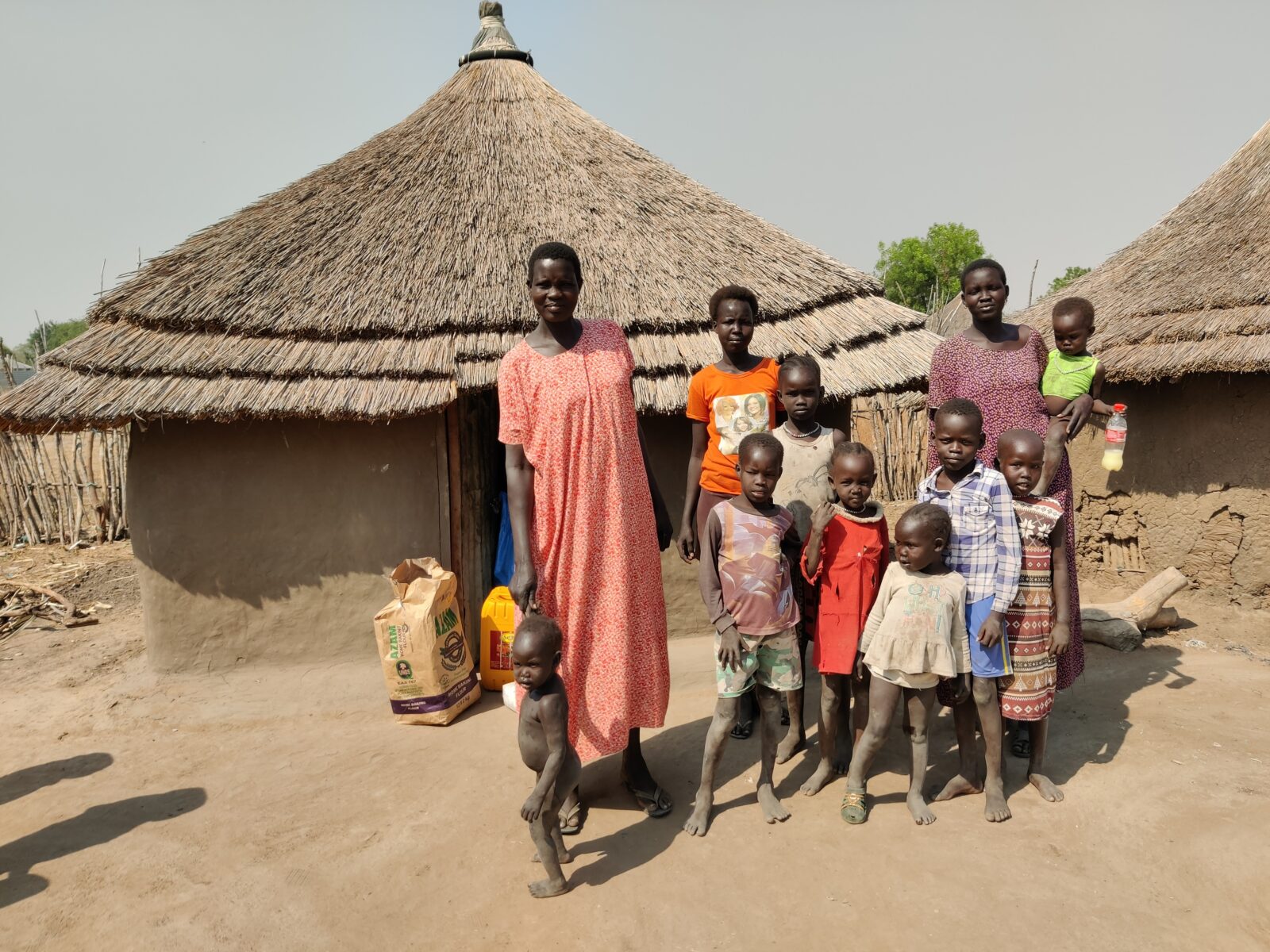
Untreated trachoma – an eye disease that causes swollen eyelids and red and tearful eyes – can result in blindness, even though this disease can easily be prevented with hygiene measures, such as washing your hands with soap and washing your face with clean water. We want to reduce the incidence of trachoma with proper treatment and prevention measures. We are happy to report that in the region where we have been working for the past 10 years, the incidence of trachoma has dropped from 33% to 12%. During 2024, we had wells drilled at 5 locations in the region as clean drinking water and hygiene are vitally important to prevent trachoma.
Mobile eye care teams in remote areas of Ethiopia
Mobile eye care teams in remote areas of Ethiopia:
screened
47390
people
operated on
570
people in the mobile clinic
gave prevention advice to
87000
residents
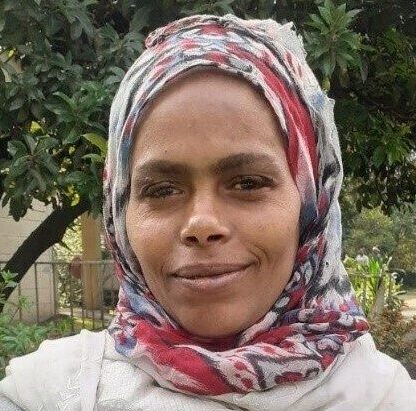
‘For a moment, I did not know what I should do next’, says 28-year-old Sofiya. ‘My friend had just told me that I probably had trachoma. Trachoma! And just like everybody else, I knew that trachoma is the beginning of the end. In a little while, I would become blind.” This mother of young children lives in rural Ethiopia. She knew that she needed help immediately, but who could she turn to? She already found it difficult to put enough food on the table every day. Water was increasingly difficult to find, and she did not have the money to pay for transport to a clinic.
Unfortunately, Sofiya’s story is just one of many. However, Sofiya was lucky because a mobile clinic of our Ethiopian partner was in the vicinity. She received a diagnosis and underwent an operation that same day – trachoma does not have to lead to blindness!
Eye care for babies and children
Rwanda
We can only prevent unnecessary blindness among children in Western Province, Rwanda, if we can intervene at an early stage in a child’s life. We therefore work together with the Kabgayi Eye Unit (KEU), a specialised eye hospital, and 12 district hospitals and health centres. In 2024, we trained a doctor and a nurse from the paediatric intensive care department to recognise eye disorders in newborns and premature babies. 779 babies were diagnosed and received timely treatment for their eye disorder.
7086
children received an eye treatment
643
children received an eye operation
999
children received a pair of glasses or other visual aids
In Rwanda, we have observed that local clinics are increasingly able to help people with simple eye disorders. That saves them both travel time and costs and allows the eye hospital to focus on specialised eyecare. A positive development!
Thanks to more funding for eyecare in 2024, we could also:
- Build a paediatric department at the eye hospital in Rwanda so that children could be helped in a child-friendly environment;
- Invest in better protection of patient data in Rwanda;
- Renovate the eye hospital in Ethiopia and provide it, amongst other things, with a new reception area and waiting room;
- Reopen the low vision unit in Ethiopia – here they distribute visual aids to adults and children with poor vision.
Evaluation of SeeYou Eye Health
In 2024, an external, independent consultant evaluated our eyecare programmes in Rwanda and Ethiopia. The evaluation revealed that over the past four years, the general health and sight of people who received help had considerably improved due to timely eye care interventions, early detection and treatment. Furthermore, our eyecare projects were found to be relevant, well-aligned with the available care, and focused on crucial gaps in eye care, such as the need for training.
‘Confidence in the quality of the care improved after the trainings. People can now go to the local government hospital instead of to a private clinic.’
Employee local hospital in Western Province, Rwanda
4. SeeYou Learns
4
SeeYou Learns
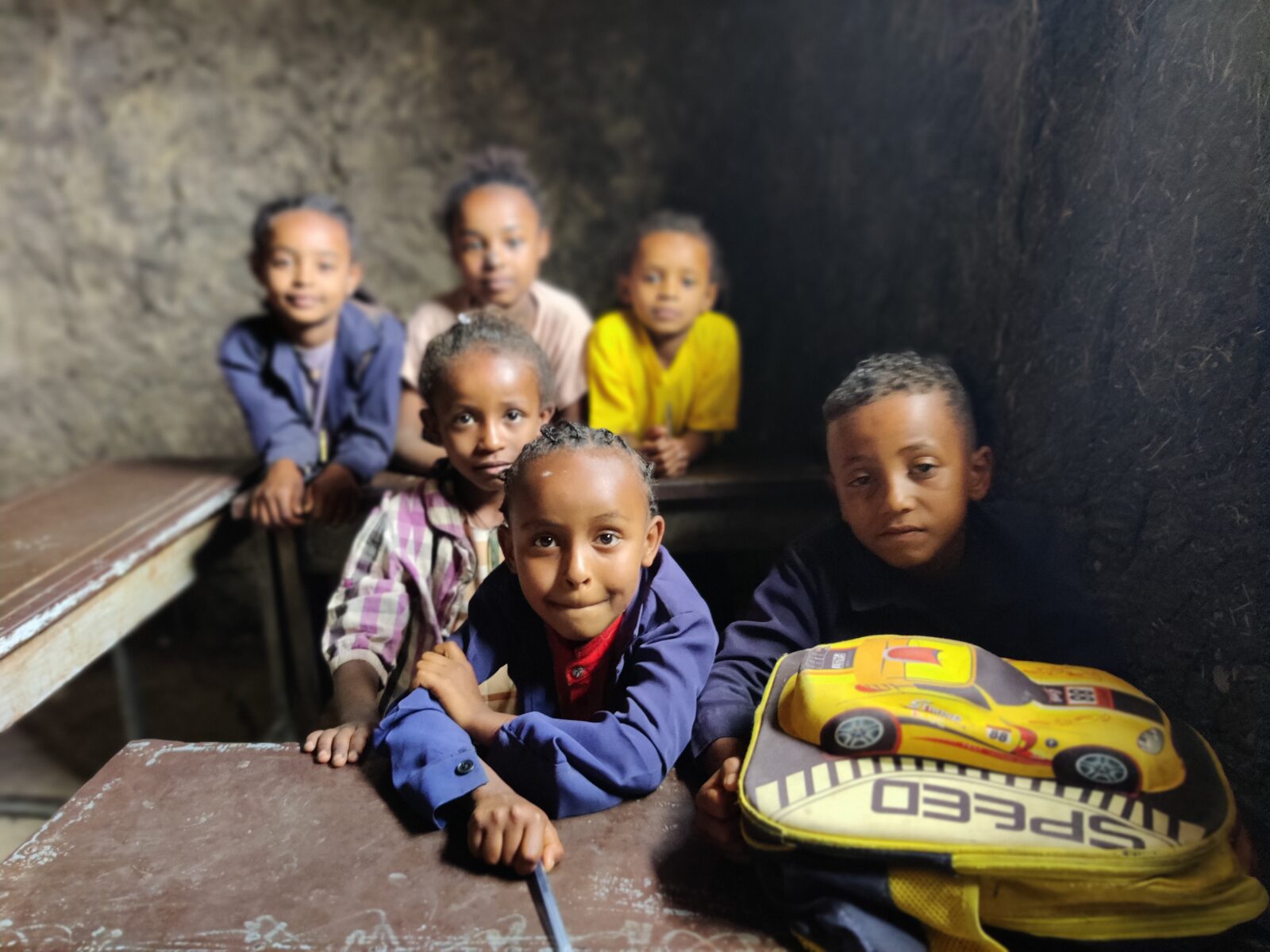
We work to achieve inclusive education in Rwanda, Indonesia and Cambodia so that, from an early age onwards, children with a disability are offered opportunities and are also valued.
Inclusive education for
469
children with a disability
20
awareness-raising campgaigns about inclusion
129
teachers and school directors trained on inclusive education strategies
New project for inclusive nursery education
Rwanda
On 1 September, our new project for inclusive preschool education started in Rwanda. Together with our new partner, Ubumwe Community Center (UCC), we are supporting 30 vulnerable children. Most of them have a disability or a family member with a disability. Thanks to this preschool education, these children have a place at home, in school, and in society where, from an early age onwards, they are valued and where they belong.
UCC inspires and trains social leaders and school directors to create an environment in which every child can participate. They help parents of pupils in raising their children and provide support in the form of transport, meals, school fees and other resources to minimise the number of obstacles that prevent children with a disability from attending school.
At the end of 2024, a conflict broke out in Congo with the rebel movement M23. The school of UCC lies just across the border in Rwanda, close to the conflict area. We are monitoring the situation carefully and continue to raise awareness about the interests of persons with a disability.
Eugene was born with weak muscles and shortened arms. His father left the family when he heard about these disabilities. Despite his disabilities, 5-year-old Eugene has big dreams: he wants to be an artist and architect. With the support of UCC, he receives not only an education but also physiotherapy, school materials, and medical care. He can now walk, and if he cannot do something, his classmates help him.
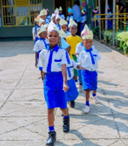
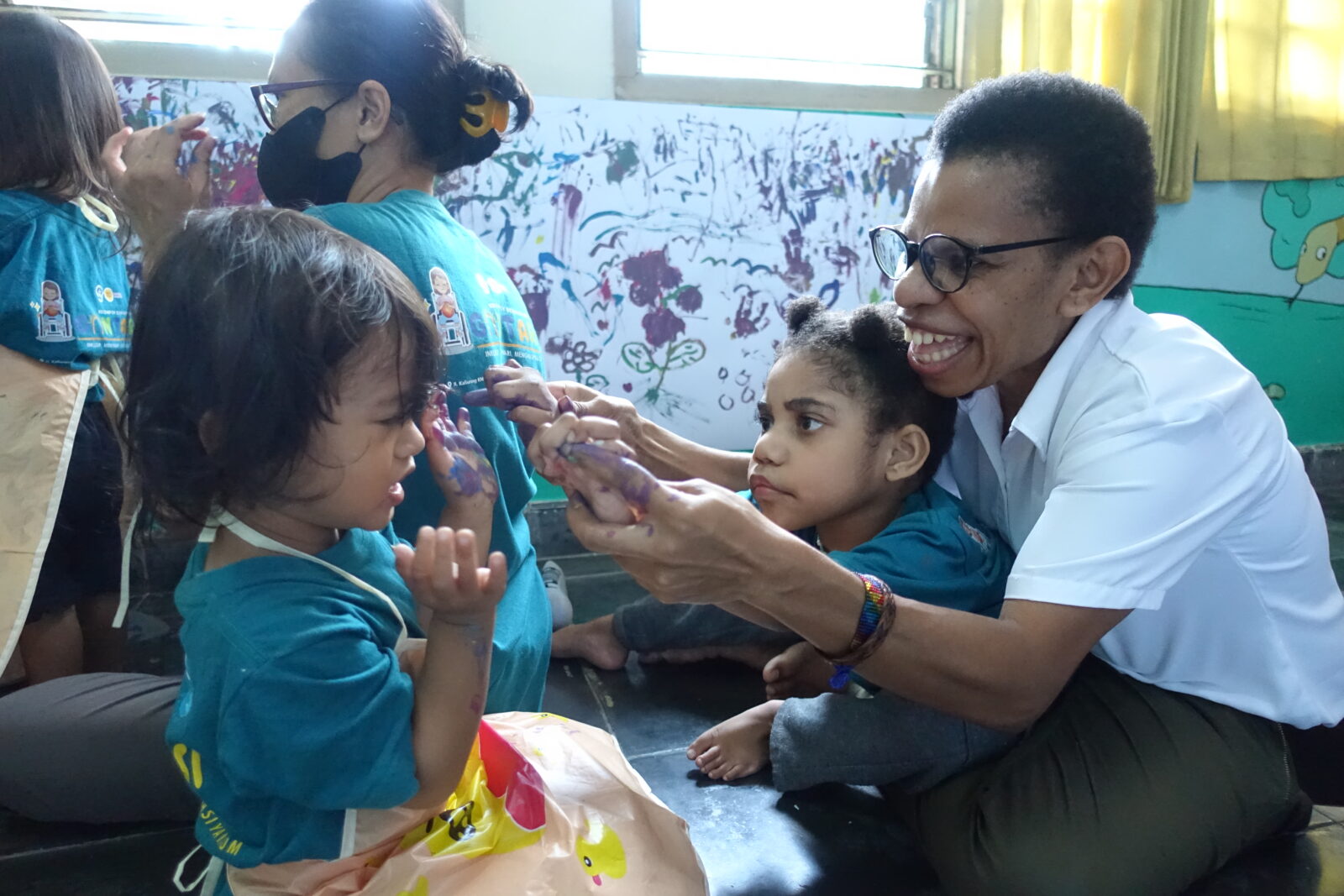
On Java, preschoolers with and without disabilities go to the same school
Indonesia
At the inclusive nursery school of our partner Pusat Rehabilitasi Yakkum (PRY) in Central Java, preschoolers with a disability and/or learning gap go to school together with their contemporaries without a disability. As an expertise centre, PRY, also supports 7 schools in the provision of inclusive preschool education. 18 teachers have learned teach classes in which all pupils can participate. In this way, 39 children with a disability and 208 without receive lessons together.
Inclusive education is positive for both children with and without a disability. This is clear from the reaction of Heri, father of 4-year-old Damar: ‘To be honest, I didn’t want Damar to go to this school with children who have a disability. But now I see that Damar is learning to be more sensitive to the needs of other children and to be friendly and caring. My opinion has changed: all children have the right to a good education, and I now try to explain that to other people as well.’
‘I dream of a place where every child is welcome
Alice (5) was born with microcephaly. That means she has a learning disability, and cannot yet stand or walk independently. There was no help for Alice in her home town Wamena, Papua. So her mother, Helga, resolutely travelled more than 3000 km to Pusat Rehabilitasi Yakkum (PRY), where Alice could receive a prosthesis and other aids. To her surprise, Helga also discovered that PRY offered inclusive education. Her daughter was welcomed with open arms, and Helga saw Alice genuinely participate in class for the first time.
Helga, also a teacher, decided to stay for six months to learn everything she could about inclusive education. ‘It feels as if God guided me here. People teach their children to maintain a distance towards children like Alice because they think that the disability is infectious. Yet despite the many obstacles, I dream of starting a place where every child is welcome, also in Wamena.’
New handbook for inclusive education
Cambodia
With our project for inclusive education, children with a visual disability receive an equal opportunity to learn at 53 primary schools in Cambodia. That means they will also receive a qualitatively good education and better supervision. We focus on direct care for pupils – with eyecare, screenings and other support – and the training of teachers, parents and schools. We do this in collaboration with the Cambodian Ministry of Education, the National Institute for Special Education and other non-profit organisations. Our partners PAfID and Krousar Thmey were requested to contribute to the national Cambodian policy plan for inclusion. One of their contributions was a new manual about inclusive education for training new and current teachers.
5. SeeYou Works
5
SeeYou Works
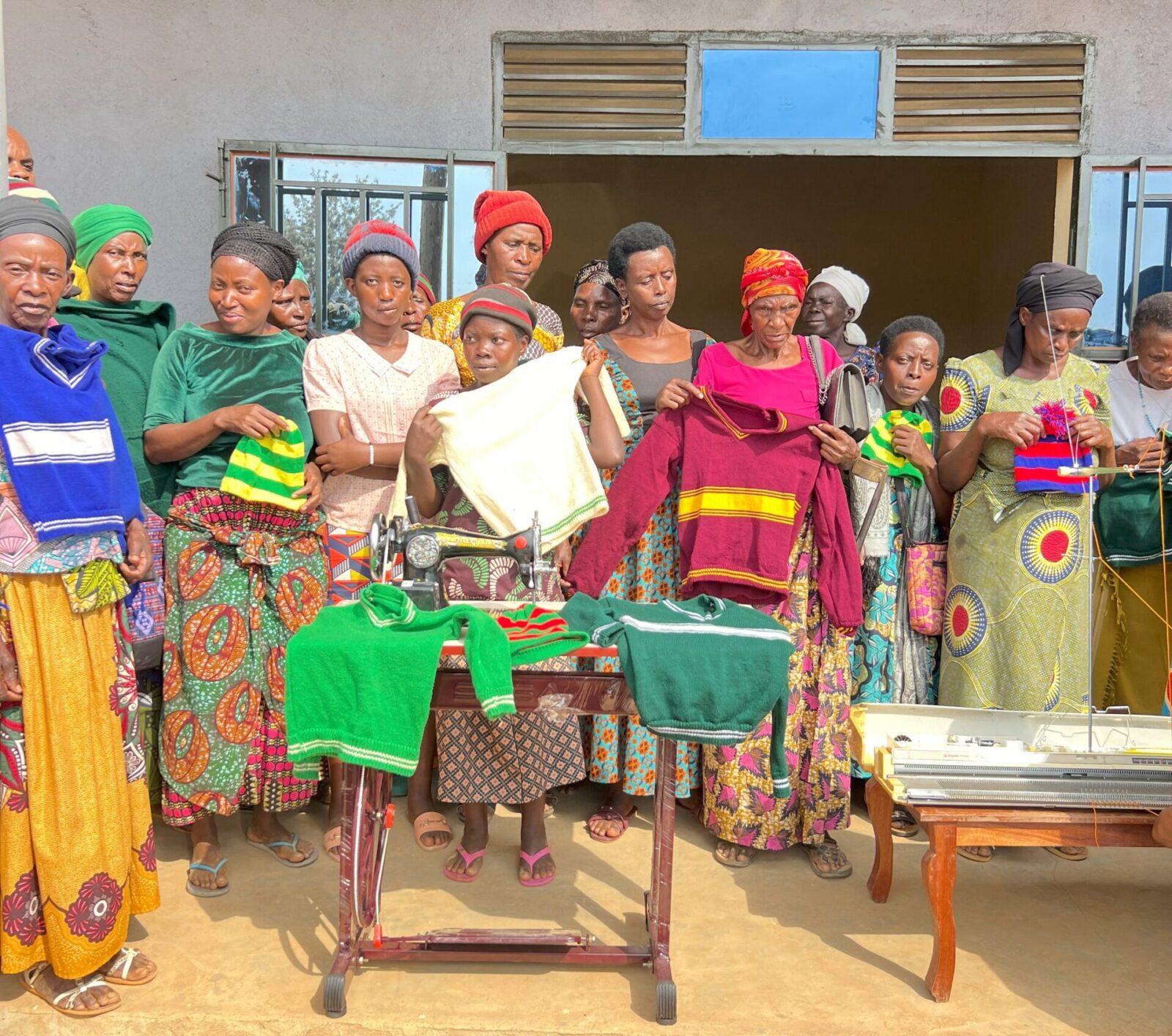
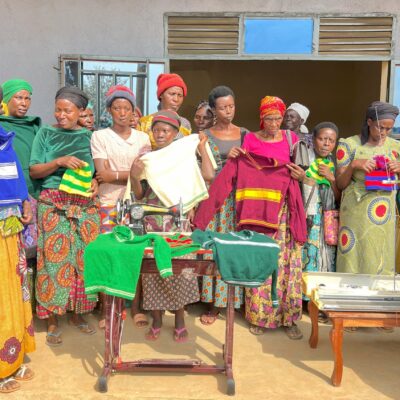
We invest in developing the self-confidence and talents of young persons with a disability. Together with employers, we take action to remove barriers so that these young people can participate on an equal footing and experience economic independence and social inclusion.
37
women with a disability received a basic training about finances
71
volunteers received training about inclusion and standing up for their own interests so taht they can start and support self-help groups
18
awareness-raising sessions about inclusion were held for a total of 3.213 people
‘As a result of what he learned about inclusion during this meeting, my husband asked me to forgive him for his previous behaviour!’
Mukanzeyi Jeanne from Karago, participant in an awareness campaign about inclusion
Evaluation of SeeYou Works
In 2024, the first two-year project period of the SeeYou Works project met UNABU in Rwanda was evaluated. Women and girls experienced a positive change in their lives. They saw an increase in net income, and 85% of the participants saw an improvement in their livelihood.
6. SeeYou Cares
6
SeeYou Cares
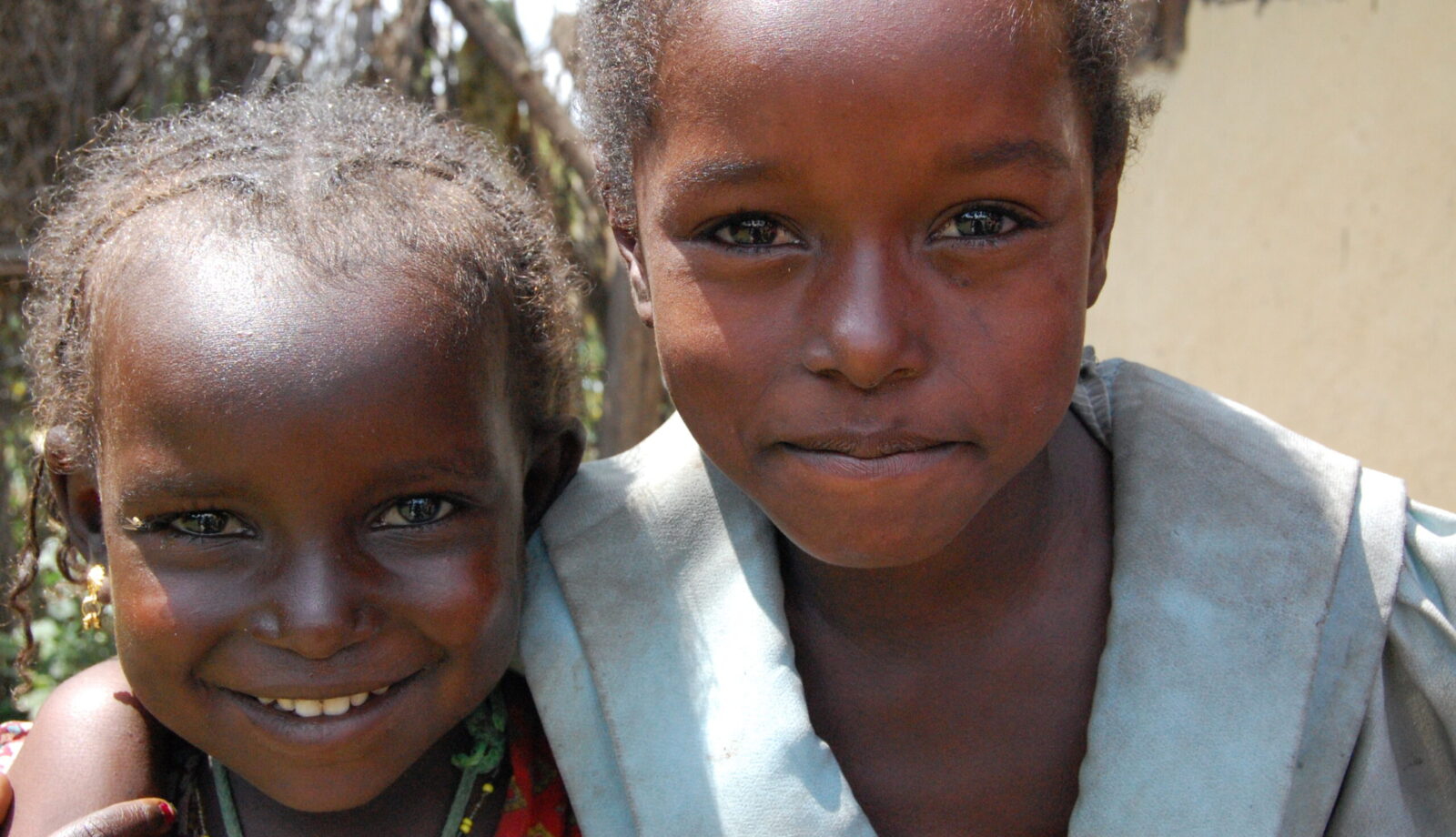
With the Every Life Matters programme, we have worked for many years in Rwanda and Ethiopia to remove barriers that persons with a disability experience in accessing healthcare. In 2024, we started phase 3, in which we want to develop a standard model for inclusive healthcare. And the programme was expanded to include Indonesia as well.
501
healthcare employees were trained in inclusive care
11104
persons with a disability received care
11408
people participated in an awareness-raising campaign
Access to care for mothers with a disability
Rwanda
In Rwanda, our Every Life Matters project focuses on equal access to care for mothers and children and social inclusion for mothers with a disability or mothers of a child with a disability. Via our partner UPHLS, we work closely with self-help groups, healthcare providers, and local leaders in five districts to remove barriers to accessing healthcare, such as stigmas attached to persons with a disability.
We can see clear progress: access to inclusive healthcare is improving thanks to training and other forms of support. Through awareness-raising campaigns and self-help groups – including 12 new groups started in 2024 – stigmas are being reduced and the social acceptance of mothers with a disability is growing.
Fewer barriers to healthcare for persons with a disability
Ethiopia
The project team of our partner ECDD invested in strong collaborations with stakeholders – such as healthcare centres, schools and government bodies – and a network of organisations committed to accessible healthcare for persons with a disability.
- 918 persons with a disability received education about sexual and reproductive health (SRH) during a coffee meeting.
- Healthcare information has now been made more accessible thanks to 40 manuals and posters in sign language.
- Persons with a disability in Ethiopia can phone a free four-digit number for audio information about healthcare. This MINCH platform – developed by ECDD – is a free mobile service that does not require a smartphone or internet data.
Every Life Matters now tackles mental health issues as well
Indonesia
Sinds augustus is ons ELM-project uitgebreid naar Indonesië. Toegang tot gezondheidszorg voor mensen met een mentale en psychosociale beperking staat hier centraal. Omdat er weinig kennis is over aandoeningen, zoals een bipolaire stoornis, Alzheimer of posttraumatische stressstoornis (PTSS), hebben mensen die worstelen met hun mentale gezondheid te maken met stigmatisering.
In de eerste periode lag de focus op het verkennen van de doelgroep, het inzicht krijgen in de uitdagingen die mensen met een psychosociale beperking in Indonesië ervaren en het creëren van draagvlak bij de lokale overheden. Het hoofd van het district Purworejo stemde toe om het project actief te ondersteunen en hield een inspirerende toespraak over inclusiviteit en toegankelijke zorg op de ‘Internationale Dag voor Personen met een Beperking’.
‘Schaam je niet, praat erover, en zoek steun.’
Ari (30) is introverted, has difficulty with social contacts and is scared of being bullied. During a long period of working far from home in Papua, the isolation got the better of him and he was overwhelmed by depressing thoughts. Once he came back home again, he shut himself in his room, became aggressive towards his parents and did not allow people to come close to him.
His family sought help from a shaman, but without result. Eventually, Ari was forcibly admitted to an institution. During the journey there, he jumped out of the car and ran onto a railway track, a moment that he no longer remembers. After a month in the hospital, a long road to recovery started. Ari was diagnosed with bipolar disorder. Thanks to a support group, intensive therapy and leadership training, Ari slowly found his way back. In his podcast, he is open about his experiences. His message to people with mental health care problems: ‘Don’t be ashamed, talk about it and find support.’
7. SeeYou Rights
7
SeeYou Rights
We train persons with a disability to stand up for good healthcare, work and education.
241
young persons with a disability followed the vocational training programme
519
people were trained as a Disability Rigths advocate
134
organisations for persons with a disability strengthened
Better future prospects for young persons with a disability
Rwanda
Menya Ukorane Ubizima Bwiza (MUB) is Rwandese for: our health, our skills, our future. And that is exactly what we are working on in this project. Together with UPHLS and RNUD, and with co-funding from the EU, we focus on equality, inclusion, respect and a better future for all young persons with a disability in Rwanda.
.
104
employees from healthcare posts, vocational institutions and employers followed a training about inclusive care, training and work.
133
UPHLS members participated in an interactive wrkshop about successful strategies, bottlenecks and action plans for inclusion
As part of the Shift of Power programme, which advocates equality between organisations in development aid, we transferred the chairmanship to UPHLS in 2025, the third year of RNUD.
‘Inspired by this knowledge, I want to teach dressmaking to persons with a disability so that they, independently and full of self-confidence, can make their dreams come true.’
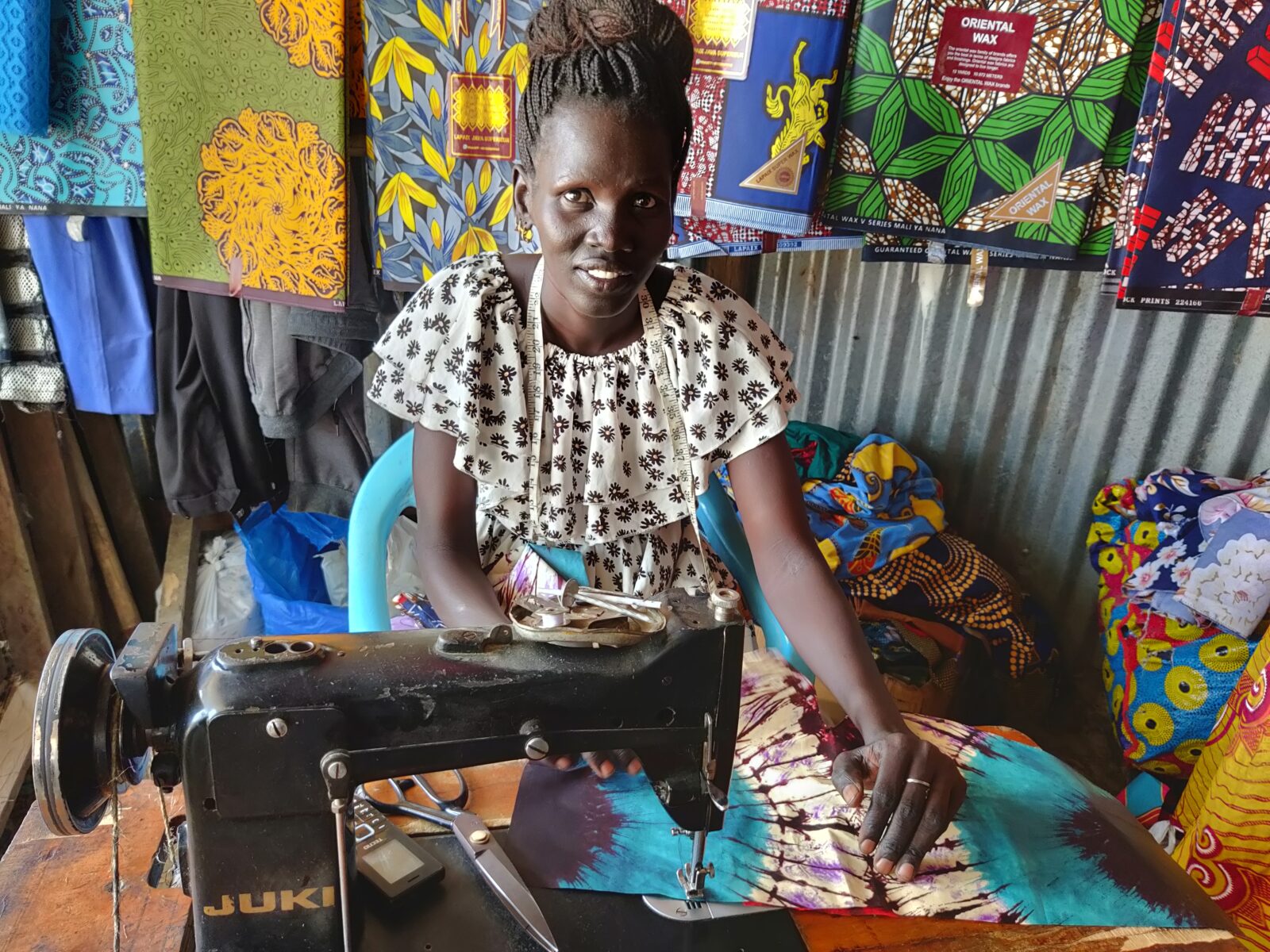
Marie Claire, from the Rubavu district, was convinced that persons with a disability could not learn technical skills until she followed a training about inclusion.

‘Young people who previously saw themselves as a burden are now able to contribute’
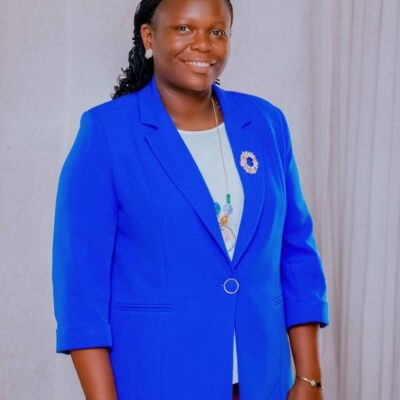
‘With the MUB project, we are training young persons with a disability so that they have more and better opportunities to work. In addition, we are creating awareness among employers, entrepreneurs and young persons with a disability about inclusion and the possibilities and rights that persons with a disability have.
In the first year of this project, 241 young people completed their education. We also notice a positive change among employers in the region. For example, a young person who was rejected due to his disability was later still employed by the same company. And due to the aids we provide, young people who hardly ever left their homes in the past now come independently to their work using a wheelchair, prosthesis or crutches. In the past, these young people saw themselves as a burden on their family. Now that they can work, they are making a financial contribution and are more independent.’
Marie Mediatrice Munezero, project manager at UPHLS in Rwanda
Inclusive villages on Java
Indonesia
In Purworejo on Java, we are working via the organisations PRY and PAfID on the empowerment of persons with a disability. In 25 villages, village groups have been established in which young people, vulnerable older people and persons with a disability take part. Thanks to inclusive small companies, 249 villagers with and without disabilities can earn an income.
In the past, home visits were difficult. Due to a sense of shame, people used to hide members of the family with a disability from us. Now there is more openness; people realise that these problems are a shared concern of the entire community and no longer hide family members with a disability.’
Head of a subdistrict of Purworejo
We are Able! for inclusion and food security
Uganda, Sudan, South Sudan and the Netherlands
In areas where great poverty exists, such as in East Africa, persons with a disability are hit particularly hard. They often remain unnoticed by their communities, and existing food programmes are less accessible to them. Together with the We are Able! consortium, we want to make persons with a disability more resilient and also work on food security in Uganda, Sudan and South Sudan.
This five-year project, funded by the Dutch Ministry of Foreign Affairs, is a collaboration with five other organisations, persons with a disability, their advocacy organisations and local governments. The fourth year focused on enabling advocacy organisations for persons with a disability to lobby for food security in a more targeted manner.
Greater attention for inclusion in Uganda
In Uganda, persons with a disability are involved more and more often in the leadership of civil society organisations. Due to policy revisions, improved accessibility and active advocacy, the attention for inclusion is growing. For instance, two directives were accepted to regulate food security and the use of alcohol, and financial institutions improved their accessibility so that persons with a disability can more easily make use of their services.
South Sudan opens its first sign language centre
In South Sudan, the state of Jonglei was hit hard by persistent insecurity, floods and a worsening economic situation. This complex combination of factors makes food security particularly important for our target group because, especially in situations like these, they are the most vulnerable. We focus on inclusive policy measures and strong local advocacy organisations to ensure that persons with a disability are not left behind in the recovery and development process of South Sudan.
- Our local partner, the Sudan National Association of the Deaf, successfully lobbied for a sign language centre! Last May, the first public sign language centre in South Sudan was opened in the capital.
We are Able! in Sudan
- Advocacy organisations, such as Gedarif Blind Union and For Them, ensured that the rights of persons with a disability were included in policy measures.
- The Gedarif Chamber of Commerce started a training for 50 persons with a disability.
- The Ministry of Culture and Media will train 20 referees in sign language.
- The Employment Office now uses an employment quota of 5% for persons with a disability and also publishes vacancies in sign language and braille.
- 248 women with a disability joined 8 new advocacy organisations for persons with a disability.
In 2023, a war broke out in Sudan and the situation is still volatile in many places. However, it is relatively quiet in the city of Gedarif and there the WaA! programme could achieve much.
Shift of Power is bearing fruit for an association of women with a disability
The Association for women with a disability (WWDA) in Sudan focuses on education, leadership and inclusion. Thanks to their efforts, the voices of marginalised women are being heard. In keeping with the Shift of Power approach, they received complete authority over grants and budgets in 2024
This year, they immediately demonstrated their position as a powerful advocacy group. Their proposal to UNICEF yielded 3 million Sudanese pounds (almost € 5000) for food and hygiene kits, and later another 5 million Sudanese pounds for children with a disability. They took part in meetings of the United Nations Population Fund (UNFPA), worked together with UNHCR in supporting refugees and, via good lobbying activities, managed to ensure that women with a disability were also included in the national policy to combat violence against women.
We are Able! in the Netherlands
In the Netherlands, we work on advancing inclusion within development cooperation as well’. For example, together with DCDD, we organised a The Power of Disability Inclusion session for WaA! members and other NGOs. On World Food Day (16 October), the day that spotlights food security, the National Food Partnership and SeeYou together organised a session about land rights for persons with a disability.
8. SeeYou in the Netherlands

8
SeeYou in the Netherlands
In the Netherlands, we share the story of persons with a disability in developing countries, involve foundations, companies and private individuals in the fight against injustice, and we encourage politicians to stand up for the rights of persons with a disability.
4.493
private donors
41
companies
55
funds and foundations
127
churches
SeeYou on Dutch TV
The Dutch TV programme EO Metterdaad filmed two of our projects in Rwanda: Every Life Matters and Eye Care for Children. The five episodes (externe link) (Dutch only) with stories about ophthalmologist Theophile and the nearly blind 14-year-old Eric, and a special mother and child episode about mother Faustia who is deaf, were aired on Dutch TV in April and June. The campaign raised a total of € 171,175.
Christmas campaign ‘Eye for you?’ raised more than € 48,000
Our employees and ambassadors could be seen in our Christmas campaign ‘Eye for you?’. Using photos, they explained why they work for access to (eye) healthcare, education and work.
Committed SeeYou ambassadors
- Ambassador Jurjen van Houwelingen published a book: Als je het even niet meer ziet [When you briefly lose sight of it]. It was sold with a SeeYou bookmark.
- SeeYou ambassadors Rianne Segers and Jurjen van Houwelingen worked together on an edition of the magazine ‘t Verschil (the Difference) of Prisma, a Dutch association of Christian organisations active in development cooperation and diaconates, published in the Dutch newspaper Nederlands Dagblad.
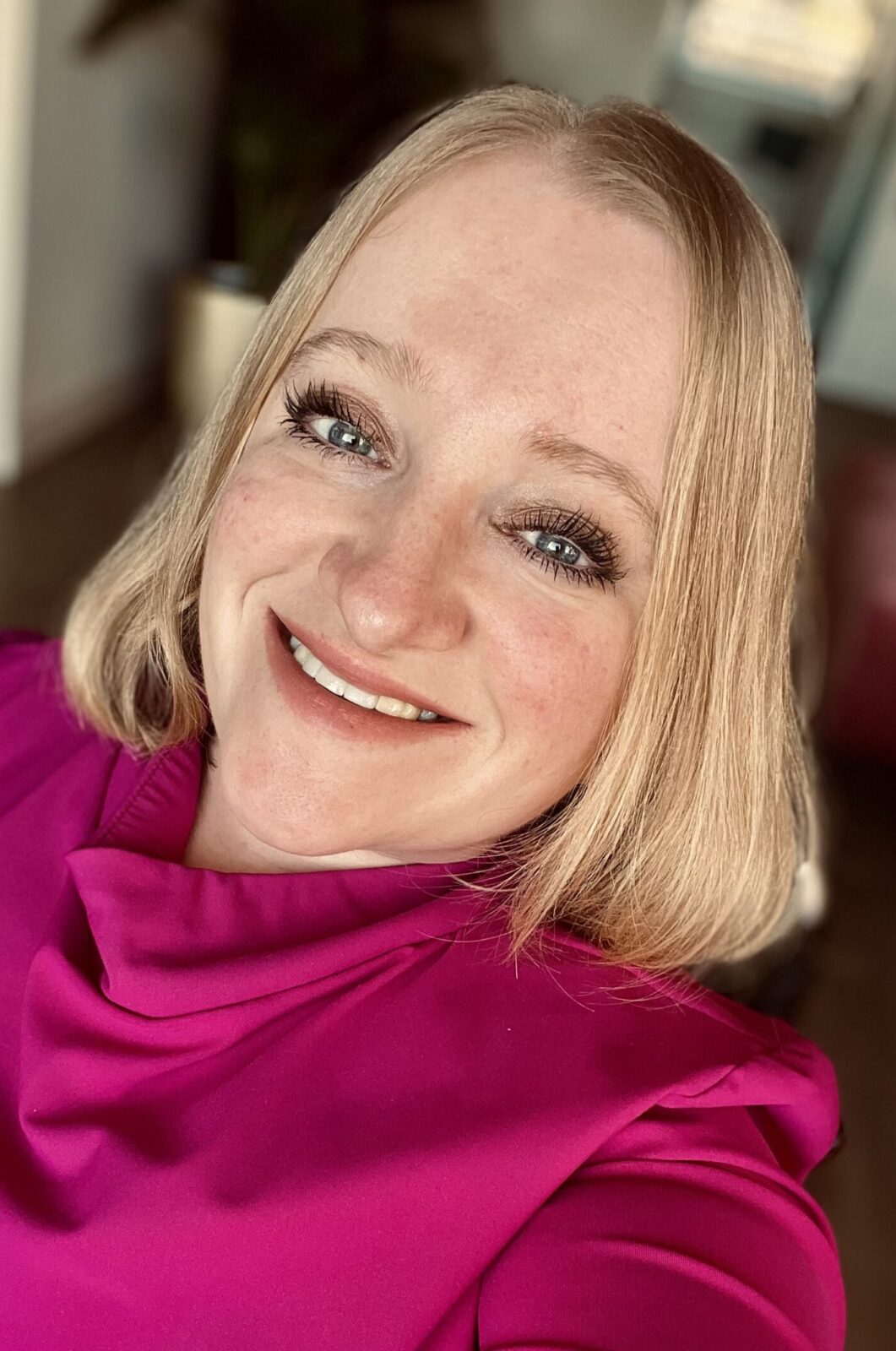
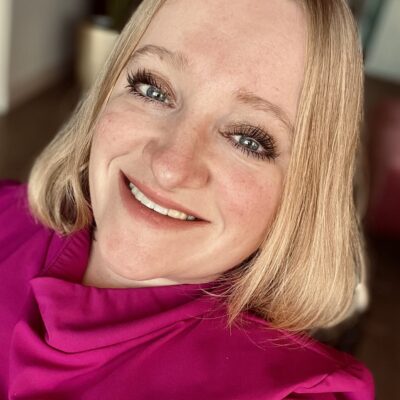
‘I have been an ambassador of SeeYou for almost three years now. By sharing their stories and campaigns with my followers on Instagram, I can contribute to the recognition of the name SeeYou – this is of great value. For example, last year, I took part in the ‘I see you’ campaign, in which we drew attention to the fact that persons with a disability are excluded in many countries.
Thanks to my ambassadorship, I am even more aware of how grateful I should be for my life as a woman with a disability in the Netherlands. I live independently, work in education and live surrounded by friends and family. That would have been a very different story had I been born in Africa. And it is fantastic to see that persons with a disability are included more in their community thanks to the projects of SeeYou. Because then a whole new world literally opens up to them.
Last year, I was also able to use my experience as an educational assistant to children with behavioural problems to contribute ideas to SeeYou Learns. This project encourages children with a disability to also go to school, preferably in a class with children without a disability. The wonderful outcome of this is that you see children playing together in the playground and a child with one leg and on crutches running after a child who is healthy – that’s a wonderful sight!’
Berdine Zwanepol is SeeYou ambassador and lives with the illness osteogenesis imperfecta (OI). As a result of this illness, her bones are very brittle, she has experienced many broken bones in her life and she is confined to a wheelchair. With her life motto ‘think in possibilities and live in gratefulness’ she inspires her 11,000 followers on Instagram.
Two entrepreneurs meetings
In 2024, we organised two meetings for entrepreneurs in which Gert-Jan and Rianne Segers gave a personal presentation about their project visit to Rwanda. For the first time, we organised one of these meetings in Zeist because we also want to build up a committed entrepreneurs network in that region.
Results of the two meetings:
- 15 new donors and partnerships
- Amount raised of almost € 100,000
- One of the people present was struck by the funding shortfall for our eye care project and phoned the next day to donate € 50,000. The other people present jointly contributed to the remaining € 25,000. We are very grateful to these entrepreneurs who wanted to encourage us in this way.
‘I look forward to contributing to increasing the impact that SeeYou has on vulnerable persons with a (visual) disability in Africa and Asia and to make this work more visible.’
Wijnand van den Bosch, about his new position as Relations Manager Investment Funds and Companies at SeeYou
New companies that share our vision
In 2024, we welcomed several companies that can relate to our mission and vision. One of them is the Japanese company VS Technology Europe, which is specialised in lenses, lighting and filters. ‘We understand how powerful sight can be in shaping individual lives as well as the future of companies. Lenses not only form our industry but also restore sight to people suffering from cataracts. We are proud to be a partner of SeeYou.’
‘From incidental donation to structural collaboration’
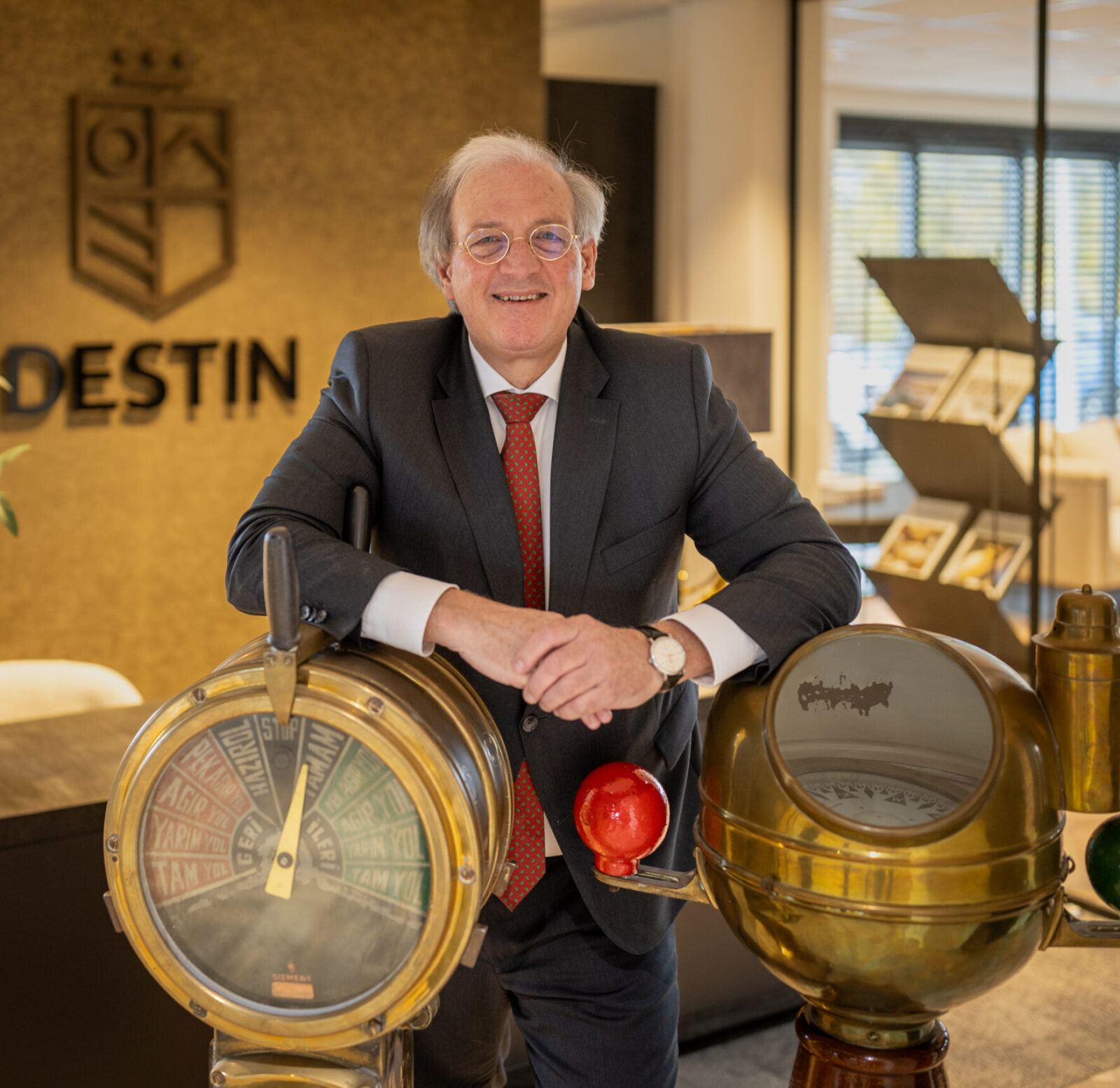
‘With our company Destin Travel, we organise trips worldwide and see mainly the sunny side of countries – the palm trees, beaches and beautiful cities. But if you look a bit beyond this, then you quickly become aware of the problems people have. We want our work to mean more than just selling trips. We make a profit and have more than enough, so why shouldn’t we share some of this? Over the years, I’ve also genuinely come to understand that giving makes you a richer person.
We have already been a donor of SeeYou for 40 years. Now, the next generation – my three sons – is busy working out how to deepen this involvement. We want to move from incidental actions to a more structural collaboration by reserving part of our annual profits for SeeYou’s work. What a privilege to be able to say to our 45 colleagues: “With your work at this travel organisation, you contribute to a better life for people elsewhere”. Thanks to the short lines of communication and low overheads at SeeYou, we are very confident that our contribution will have as big an effect as possible.
My advice to entrepreneurs? Don’t wait until tomorrow to support good causes. I know my own heart, and tomorrow, there’s always a setback or another reason why you will not do it. So if you have a valuable idea, then take action straightaway.’
Cees van Pelt, director of Destin Travel
9. Collaboration
9
Collaboration
Taking action together
In all of our projects, we work together in partnership with local organisations. Through equality, an appreciation for each other’s work and the sharing of knowledge and expertise, we can achieve more impact together. Our partners know the situation, community and culture and have the required specific expertise about (eye) care, education or work. Depending on the project, we also work together with local schools, churches, or companies.
We believe it is important that all of our themes – eye care, access to care, education and work, and equal rights – come together in our projects. That requires mutual collaboration from the different local partners, each of whom will contribute with their own knowledge and discipline from this year onwards. For example, our Every Life Matters programme, with its focus on mental health issues, has also been active in Indonesia. Because in three countries within this programme, the focus is on a specific health theme, partners can share knowledge with each other and learn from each other.
‘In a relatively new project, such as MUB, you also come up against challenges. We discussed these in our monthly meetings with our team and Niska, project coordinator at SeeYou. The support from the Netherlands was most valuable in properly implementing this new project. SeeYou is not just a donor to us but more a real partner. They provide input, we learn from each other and we share both challenges and best practices. In the coming years, I hope that SeeYou and our organisation together can reach even more children, young persons and adults with a disability.’
Marie Mediatrice Munezero, project manager at UPHLS in Rwanda about the new MUB project of SeeYou Rights
Connection creates more impact
We connect knowledge and expertise from Dutch organisations with that of our partners in project countries. One example is our collaboration with the Dutch Christian emergency relief and reconstruction organisation ZOA and the Leprosy Mission. For instance, together with the Leprosy Mission, we provided a disability inclusion training for new employees. We also strengthened the collaboration with organisations that have specific expertise about (visual) disabilities, such as the global Christian Blind Mission (CBM) and Light for the World Belgium.
Satisfaction of our partners
The partner satisfaction survey revealed that our local partner organisations are highly satisfied about the collaboration. They feel heard, respected and there is mutual trust. When it comes to practical matters, they also feel that the communication is good, they know who to contact and their questions are quickly answered. One point for improvement revealed by the survey is that partners do not always know who they can approach about integrity issues. Therefore, we have developed posters with a summary of our integrity policy and code of conduct. In 2025, we will bring up integrity more often in discussions with our partners and investigate how we can support our partners even better still with training about this subject.
New collaboration with FIDA International
In 2024, we entered into a collaboration with Fida International (externe link, opent in nieuw tabblad). Just like us, this Finnish development organisation focuses on the inclusion of persons with a disability. They have valuable expertise in inclusive education and have long worked with local partners to realise sustainable impact. Together, we are committed to realising inclusive education and strengthening the position of persons with a disability by providing them access to education and equal opportunities. Through this collaboration, we are taking an important step towards a world in which everybody counts.
Networking
We share our knowledge with various organisations and continue to learn about inclusion, eyecare, operations and fundraising as well. We do that within various networks and sector associations. We deliberately choose several networks and platforms in which we can participate in a worthwhile and committed manner. Due to our membership of these networks, we are even better informed about national and international developments in the area of inclusion.
Partos
Sector association that brings together more than 100 Dutch organisations for development cooperation and humanitarian relief.
Prisma
Association that focuses on the role of Christian organisations in international development cooperation, politics and society.
Dutch Coalition on Disability and Development (DCDD)
Dutch network for inclusion of, and advocacy for, persons with a disability in developing countries.
EU-Cord
European network that focuses on collaboration and policy influencing in international collaboration. Within this network, there is specific attention for lobbying, advocacy and institutional fundraising.
International Disability and Development Consortium (IDDC)
International platform for stakeholders in the area of disability and inclusion.
10. Our organisation

10
Our organisation
Change in the structure of our organisation
Last year, we made changes to the structure of our organisation. The starting points were simplicity, short lines and a clear allocation of roles and responsibilities as low as possible in the organisation. From now on, anyone whose role involves subject-specific knowledge will from now on contribute to decision-making as well. Three concrete changes are:
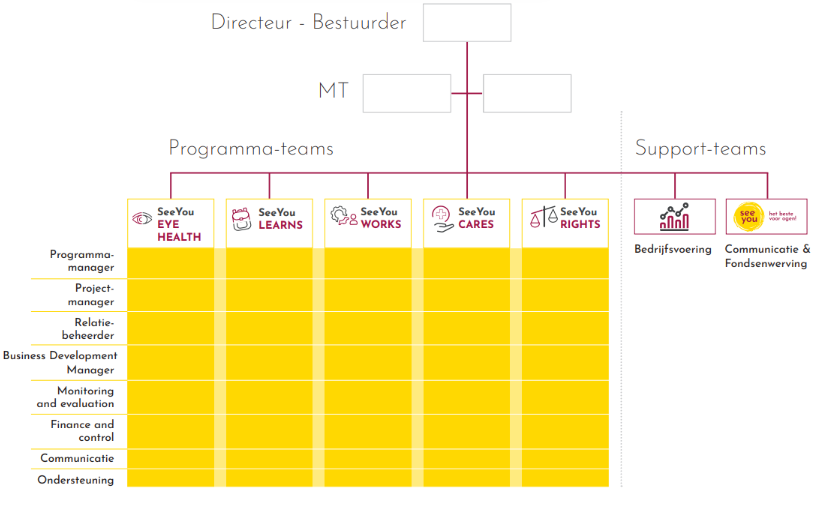
Multidisciplinary programme teams
We now work with five multidisciplinary self-directing teams that connect with our five core programmes, and also with a team for communication and fundraising, and a team for operations. As colleagues with substantive expertise and colleagues from fundraising and financial control work together more intensively, the mutual management and connection between programmes and fundraising have improved.
Lighter management layer
We strive to realise an organisational structure that is as light as possible and appropriate to SeeYou’s size. We have made the switch to a smaller management team that consists of the executive director and a team leader.
Small size of operations and fundraising & communication teams
With the departure of both team leaders, the tasks and responsibilities have been allocated to other colleagues. And because we did not replace the interim team leader communication & fundraising, the use of independent professionals in the organisation has decreased as well.
Our – renewed – team
In 2024, we bid farewell to several people. We said goodbye to both the executive director Dicky Nieuwenhuis and to Jan Banninga, who has been team leader financial control for many years as well as interim team leader fundraising & communication. However, we were also able to welcome several new colleagues. For example, our team was strengthened with a communication officer, relations manager, programme coordinator, office manager and, at the end of December, a new executive director. By the end of 2024, our team consisted of 11.5 FTE made up of 14 salaried employees and an independent professional. The absence due to illness rate fell to 7.53% – which was almost entirely due to a long and extra-long period of illness.
Departure Dicky
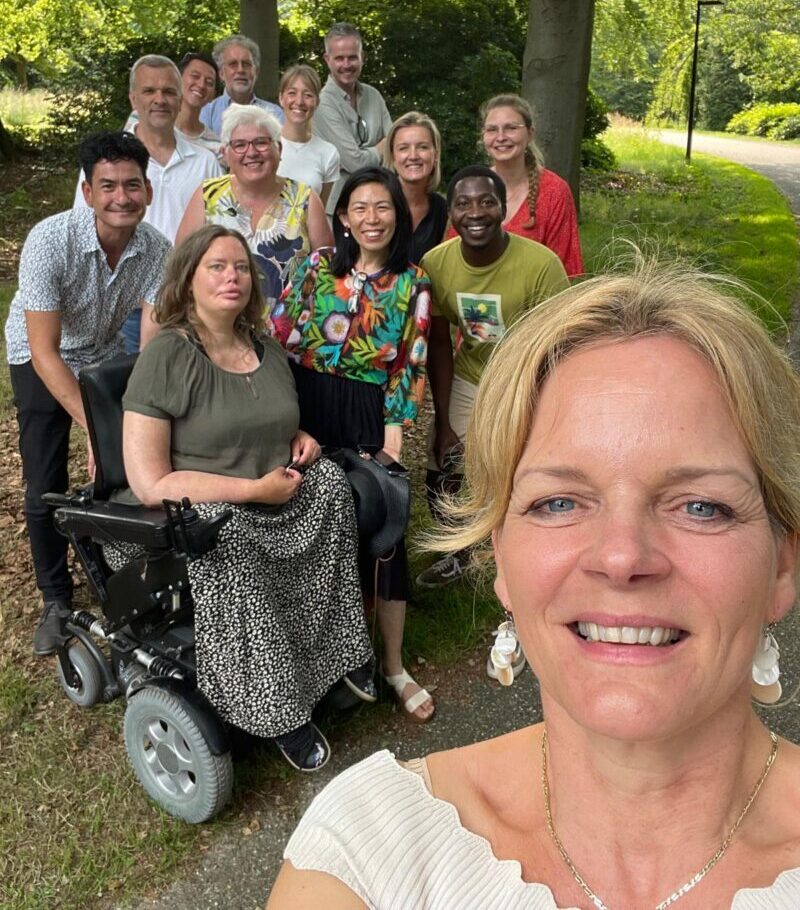
In December, Dicky Nieuwenhuis said goodbye after seven years as executive director of SeeYou. We will miss her expertise in development cooperation, her enthusiasm and, above all, her compassion for persons with a disability. During an informal goodbye party with our team, everybody had a personal word for Dicky, which once again underlined her considerable commitment to our team. As a leaving present, we gave Dicky a beautiful braille welcome sign for the entrance of our office. Dicky also wrote the Christmas story “Light in your eyes” as a thank you to our donors; colourful stories from a small Rwandan village about the young shepherd Joseph.
‘Over the past years, I was always driven by the mission of SeeYou: to ensure that people can see and are valued. I’m pleased that there is now a capable and motivated team that will focus on and further developing this mission after my departure.’
Dicky Nieuwenhuis, former executive director SeeYou
Team day and employee satisfaction
During a pleasant day that included a picnic, singing workshop and a meal together, we bid farewell to two colleagues and had the time to get to know several new colleagues better.
In 2024, our employee representation held talks with the executive director on four occasions. These meetings discussed, amongst other things, the employee satisfaction survey, the employee handbook that we will rewrite in 2025, the annual plan and the budget. The employee satisfaction survey revealed that the entire team has a good relationship with colleagues and managers, is positive about the management, gains satisfaction from their work and are treated with respect. Several colleagues still need to get used to the new way of working in programme teams or have not (yet) experienced this as positive. The outcome of the survey was discussed with the entire team under the leadership of the employee representation.
‘Looking back on 2024, my visit to Rwanda was an absolute highlight. Young persons with a disability there told me that a vocational training not only gave them access to work and an income but, even more importantly, a place in society. Knowing that our work makes a difference in the lives of persons with a disability inspires me!’
Niska Stoker, Programme Manager SeeYou Learns and Integrity Officer
Recognised as a charity by the Dutch charity monitoring organisation (CBF)
As a CBF-recognised charity, we meet the strict quality requirements that are audited by the CBF. This quality mark was extended for a period of three years in 2022
ANBI
SeeYou has been classified as a Public Benefit Organisation (ANBI) by the Dutch Tax and Customs Administration. As a result, donations to the foundation are tax deductible.
ISO 9001 and Partos 9001
Our charity is ISO 9001 and Partos 9001 certified. This certification concerns internal and external processes, and they are regularly tested and adjusted.
Complaints
We believe it is important to know what our supporters think, and we handle the feedback we receive with care. By learning from this feedback, we can improve the quality of our work and grow further as an organisation. We also discuss feedback in our projects so that it can improve these as well. In 2024, we received no official complaints.
Integrity
Integrity is high on our agenda. We know – and countless studies reveal this as well – that persons with a disability face a considerably higher risk of being abused. Safety, an open learning culture as well as a strong integrity policy are vital for preventing such abuse. As we collaborate directly with local partner organisations in Africa and Asia, we bear responsibility as well for ensuring that our partners have a good integrity policy that protects the people we aim to support with our work.
Integriteitsbeleid
Our integrity policy (externe link) describes the distinction between our direct and indirect responsibility to stakeholders and our target group, and how we and our partners should act with integrity
- Statement of integrity
- Code of conduct
- Prevention policy
- Reporting code
- References to underlying provisions: Transparency & anti-corruption policy, Regulations for confidential advisers, Whistle-blower policy, and Complaints procedure
Integrity at our partners
Partner organisations must demonstrate that they realise an active integrity policy and undersign the basic principles with respect to integrity in contracts. The subject of integrity is always on the agenda in our contact with and during work visits to our partner organisations. We ask our partner organisations about their integrity (also called safeguarding) policy, how they implement this and the issues that they come up against.
In 2024, we developed a poster for our partners in which we clearly explained our integrity policy, our code of conduct and the possibility to report complaints and breaches of integrity. With this, our partner organisations know which standards of behaviour apply at SeeYou – and that we expect these to be followed in all our projects – and that we wish to be held accountable if we do not act in accordance with our own rules.
Internal measures for acting with integrity
We also want our employees to work in a good and safe working environment. We therefore have measures with respect to prevention, adequate support and follow-up trajectories. As part of our preventative measures, we regularly discuss the importance of acting with integrity, and concrete moral dilemmas. Together, we examine whether our policy still aligns with the everyday practice of our work and whether we need to change our role in the area of integrity towards our partners.
In 2024:
- we started a collaboration with an external confidential adviser;
- we appointed an integrity officer.
Code of conduct
All of our employees and volunteers have signed a code of conduct. This is based on our core values – every person is valuable, there is room for everyone, Christian charity, and justice – and forms the basis for all of our actions. We also endorse the 2019 Partos Code of Conduct with guidelines on cooperation with civil society organisations in project countries, setting up a professional organisation, and agreements on communication and fundraising.
We fully realise that we always work with the financial resources that are entrusted to us by others, such as donors, funds, and foundations. Therefore, we follow the guidelines in our Transparency & Anti-Corruption Policy to minimise the risk of misusing these resources.
Corporate Social Responsibility (CSR)
Our CSR policy statement has three principles:
Working fairly and honestly
The previous sections on Quality and Integrity describe how we shape this.
Respect for our stakeholder, our work and our organisation
In addition to regular satisfaction surveys, the various stakeholders, such as ambassadors, donors, equity funds, family of the founders and strategic partners in our project countries and in the Netherlands, are consulted annually on strategic decisions.
Respect for society and the environment
We want to make careful use of natural resources. That is why we choose to pay a CO2 compensation for our air travel by making a donation to the A Rocha foundation’s “Climate Stewards” programme. In addition, our employees work at the office for 50% and from home for 50%. In addition, our office building is closed one day per week as well, and we heat our office in a climate-aware manner. This means that we use less energy at our office and reduce CO2 emissions due to commuting.
Risk management
Our work often involves risks and uncertainties. Through our risk management, we map risks and limit any potential impact they may have. With a three-monthly risk analysis from the management team and a sound policy concerning project expenditure, reporting, monitoring and integrity, we aim to realise structured risk management. We foresee five important risks in the coming years.
1. Uncertain external conditions as a result of conflicts and political unrest
Probability: high
Potential impact: high
We work in various countries where the political environment is fragile and conflicts can suddenly flare up. For example, a civil war is taking place in Sudan and at the end of 2024, a conflict broke out in Congo and the border area with Rwanda. Persons with a disability are hit the hardest in war and conflict situations because it becomes even more difficult for them to access care, education and work.
Our measures:
- We monitor the situation in conflict areas where our partners work. And we continue to draw attention to the rights of persons with a disability in these situations as well;
- Continue to make investments in projects for healthcare, education, economic independence and food security;
- Request attention from governments to make (emergency) help inclusive for persons with a disability;
- Deploy extra emergency relief campaigns where necessary.
2. Loss of income due to less government funding
Probability: high
Potential impact: high
Changes are taking place in the political landscape. G
Government funding is being reduced in both the Netherlands and the United States, and cuts are being made to development cooperation. These changes mean less income, and because more NGOs will try to find alternative sources of funding, the success rate of fundraising proposals will be reduced.
Our measures:
- Develop new innovative strategies;
- Only award expenditure if the income is guaranteed;
- Spread risk by increasing our programme portfolio and distribute the use of legacies over several years;
- Closely monitor developments in income, and invest in retaining current donors and attracting new donors;
- Focus relations management on target groups with which we have a strong connection.
3. Rising costs as a result of inflation
Probability: high
Potential impact: high
Costs are rising in our partner countries as well as in the Netherlands. This affects the realisation of our projects and our activities in the Netherlands where less can be achieved for the same costs.
Our measures:
- Discuss project implementation priorities with partners in project countries;
- Investigate possibilities to reduce costs by working together with organisations in our field;
- Look even more critically than before at what is really needed with respect to our organisational costs.
4. Integrity violations and fraud
Probability: medium
Potential impact: high
In a period in which (sexually) undesirable behaviour makes headlines, we are aware that this risk is present in all companies and organisations. And that our target group, in particular, is especially vulnerable to this. Possible violations of integrity not only result in a considerable loss of reputation but, more importantly, can permanently damage people.
Our measures:
- Strong integrity policy;
- Keep discussing integrity within our organisation and with partner organisations;
- Internal processes aimed at preventing fraud, which is monitored both internally and externally.
5. 5. Limited team capacity
Probability: high
Potential impact: high
With a smaller organisation size, we try to achieve as much as possible with as little as possible. This does, however, mean that there are immediate repercussions when a team member is (temporarily) absent.
Our measures:
- Organise work as effectively as possible in self-regulating multidisciplinary teams;
- Pay attention to preventing absence due to illness and provide good supervision for colleagues who are on sick leave;
- Continue to ensure an attractive working environment and work satisfaction.
11. Board and supervision
11
Board and supervision
Change of governance model
At the end of 2023, the board made the switch to a supervisory board and transferred its governance task to the executive director. All roles and responsibilities have been set out in the statutes and further elaborated in the regulations for the board and supervisory board. With this step, we are better aligned with the supervisory model that is standardly used in the charitable sector. In addition, the type of board and supervision is part of the CBF’s recognition scheme for charitable organisations CBF and will therefore be assessed for us to become eligible for the CBF quality mark.
New executive director
in June 2024, executive director Dicky Nieuwenhuis announced her departure. Subsequently, a recruitment procedure for a new executive director was initiated and we appointed Jolanda Omvlee. She started on 1 December 2024, and Dicky Nieuwenhuis onboarded her for a month before leaving SeeYou on 1 January 2025. We are pleased with the arrival of Jolanda and grateful for all the good work that Dicky carried out for our organisation over the past years.
Additional positions of executive director Jolanda Omvlee-Tijhuis
- Owner Jolanda Tijhuis Executive Coach & Interim
- Owner and founder of Pilgrim Leaders
- Member of the supervisory board of the school consortium Hannah in Bergentheim
Executive director’s salary
The supervisory board has determined the remuneration policy, the level of remuneration and the size of other remuneration components. This policy is updated regularly. In doing so, we follow the Remuneration Scheme for Directors of Charitable Organisations as drawn up by the charity sector organisation Goede Doelen Nederland. Using these weighting criteria, the supervisory board has awarded a so-called BSD score of 380 points to our director Dicky Nieuwenhuis, and according to this scheme, the maximum annual income is € 129,292. Her actual annual income in 2024, including holiday pay, year-end bonus and pension contribution, was € 99,503. Her pension contribution and transition payment was € 30.950. The income of Jolanda Omvlee in 2024 was € 5,296, including holiday pay and a year-end bonus. Her pension contribution was € 640.
As a result, the annual income, the taxed allowances and additions, the employer’s pension contribution and the other remunerations remained within the maximum norm stated in the Remuneration scheme. In the annual accounts under ‘Explanation stated income and expenses’, the size and composition of the remuneration are explained in greater detail.
Our supervisory board
The supervisory board safeguards the mission and identity of our organisation and supervises the executive director, policies and plans of SeeYou. Members of the supervisory board receive no financial remuneration for their work. They can, however, declare costs they have incurred for their work as a supervisory board member. In 2024, the costs of the meetings amounted to € 780, and the remunerations for travel costs amounted to € 1,248.
Members of the supervisory board on 31-12-2024
| Name and position | (Additional) position | Board members since | Eligible for reappointment | Outgoing |
|---|---|---|---|---|
| Sander van Bellen, chair | Chief Financial and Risk Officer at a.s.r. Income | 2018 | n/a | 2026 |
| Erik Werkman, vice-chair | Coach, Trusted Advisor | 2021 | 2025-2027 | 2029 |
| Annet Lukkien, member | Manager Partnerships Dorcas, Consultant Inclusion Matters | 2018 | n/a | 2026 |
| Job de Wit, member | Team leader ARAG, unit Real Estate | 2019 | 2023-2025 | 2027 |
| Marlies van der Kroft, member | Disability and Development Cunsultant | 2022 | 2026-2028 | 2030 |
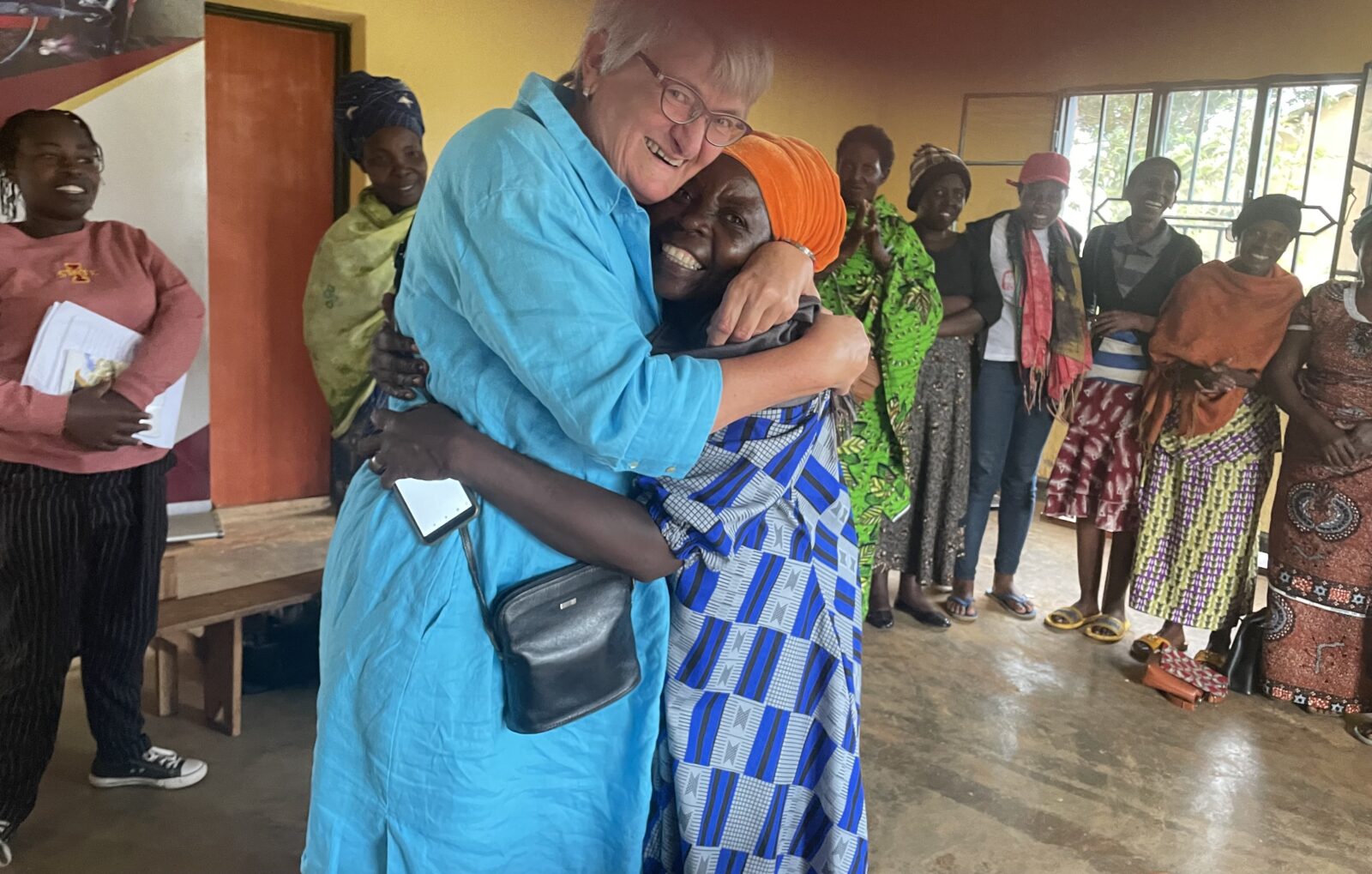
“There is still much to be done to improve the legal position of persons with a disability”
‘I was born with multiple disabilities, and for more than 30 years, I have worked on improving the position of persons with a disability. I’ve done that in various positions – from programme coordinator to founder of various disability NGOs and networks – where I worked for different organisations in almost all African and Asian countries.
For example, I was asked to plead a case and won it in the General Meeting of the UN in New York for the children’s article of the United Nations Convention on the Rights of Persons with Disabilities, which was a huge milestone. Due to a series of operations, I had to stop working 2014, but I remained committed to the fight for equal rights. So when, in 2021, somebody pointed out the vacancy on the board of SeeYou to me, I decided to make a contribution in this way.
Meetings and decision-making in 2024
The supervisory board met on six occasions in 2024. This concerned four regular meetings, a self-evaluation and a strategy session about the impact of our programmes and strategic collaboration with other relief organisations. The supervisory board of SeeYou has the following committees: the audit committee and the remuneration committee.
The following decisions were taken:
- approval annual report and financial statements 2023;
- approval annual plan and budget for 2025;
- approval new statutes and regulations concerning the governance and supervisory board of SeeYou;
- appointment new executive director with effect from 1 December 2024.
Evaluation of the supervisory board’s functioning
The supervisory board evaluates its own functioning every year, which includes the new supervisory model. The supervisory board members concluded that the assignment of roles between governance and supervision functioned well. It was also noted that more insight is required into the strategic choices for the supervisory role to be fulfilled well. Furthermore, the supervisory board has prioritised continuing its search for a long-term collaboration partner for SeeYou.
12. Finances
12
Finances
Financial results 2024
In a changing and turbulent world, we are pleased to note a positive financial result for 2024. We owe these results to our supporters’ faithful commitment, contributions from funds, government bodies and private individuals, and several cost-saving choices made within the organisation. Below, we provide an explanation of the main points and most important results of our financial policy.
- Despite inflation and higher prices, also in the project countries, we could reach over 30,000 more people than in 2023.
- More than 3.3 million euros (80.7%) of our income went to our projects for equal access to (eye) healthcare, education, work and inclusion in the project countries.
- In 2024, we spent 87.2% of our income on implementing our objective. 80.7% of our income went to our projects. The remaining 6.5% was utilised to raise awareness and provide information about the need for inclusive development.
Expenditure
Income
| Spent on objectives | 87,24% |
|---|---|
| (Eye)care and inclusion for persons with disabilities in project countries | 80,67% |
| Awareness raising | 6,57% |
| Other expenses | 12,76% |
| Fundraising | 7,85% |
| Management and administration | 4,91% |
| 100% | |
| In 2024, expenditures and expenses totaled €3,815,946. These expenses can be broken down as follows: | |
| € | |
| Spent on objectives | 3.329.081 |
| (Oog)zorg en inclusie van mensen met een handicap in projectlanden | 3.078.283 |
| Awareness rasing | 250.789 |
| Other expenses | 486.865 |
| Fundraising | 299.547 |
| Management and administration | 187.318 |
| 3.815.946 |
| 2024 sources of income by origin | |
|---|---|
| - | |
| Income from individuals | 37,6% |
| Income from companies | 2,4% |
| Grants from governments | 29,2% |
| Income from other non-for-profit organisations | 30,8% |
| Other sources of income | 0,1% |
| 100,1% | |
| In 2024, SeeYou received a total of €4,133,590. This revenue came from the following sources: | |
| 2024 sources of income by origin | € |
| Income from individuals | 1.553.178 |
| Income from companies | 98.681 |
| Grants from governments | 1.206.569 |
| Income from other non-for-profit organisation | 1.272.582 |
| Other sources of income | 2.580 |
| 4.133.590 |
Income
In 2024, we received a total of € 4,133,590. That is more than we had budgeted for and a slight rise (7.6%) compared to our income in 2023. The receipt of legacies contributed to this good result. This support is encouraging and increasingly important in a time of decreasing government support for our sector, and now that our donors are affected by worldwide conflicts and inflation.
The rise in income will go to increasing our project portfolio. A larger portfolio is important because by scaling up with the same people and office costs, more or larger projects can be supported, resulting in a more favourable cost allocation.
Gifts from private individuals and companies
In 2024, we received a total of 87% more than budgeted from individual donors. A large number of individual donations and legacies played a role in this. The growth in income from companies continued in 2024 and increased by more than 10% compared to 2023. We need private individuals’ support more than ever, regardless of the contribution size. Accordingly, we will also remain committed to recruiting private individuals to reach more people in 2025. We will also continue to invest in our relationships with companies.
.
Grants from governments
The Dutch Ministry of Foreign Affairs is funding the We are Able! programme for the period 2021-2025. In 2024, this amounted to more than € 1 million for the programme in Uganda, Sudan, South Sudan and the Netherlands. Despite the continuing war in Sudan, our partner, Action on Disability and Development (ADD), could implement the programme to a large extent.
Since November 2023, the EU has provided funding for the Menya Ukorane Ubuzima Bwiza (MUB – Our Health, Our Skills, Our Future) project in Rwanda. Their commitment is about € 150,000 per year for a 3-year period.
Income from other not-for-profit organisations
The income from other not-for-profit organisations was more than 1.2 million euros this year, which was 14% lower than budgeted. This decrease compared to 2023 was partly because a large project with associated funding stopped at the end of 2023. Nevertheless, that 1.2 million euros is still a vital amount, and it enabled us to successfully support our projects for equal access to eye healthcare, education, and work in Cambodia, Ethiopia, Indonesia, and Rwanda.
From the total income, we could spend 80.7% on our objective. This is lower than the 84% of 2023 because part of the income was received at the end of the year and has not been spent yet. The 3-year average is 83.8%.
You can find more detailed figures about the income in the financial statements.
Expenditure
In 2024, the total expenditure was € 3,815,946 and 87.2% was spent on the objective of our organisation as opposed to a budgeted percentage of 82.9%. With our projects, we reached 30,000 people more than in 2023.
This positive development was possible due to a reduction in our fundraising costs and by economising on other costs as well. A total of 80.7% of our expenditure was for project expenditure for our projects in Africa and Asia for inclusive eye healthcare, access to care, education work and equal rights of persons with a disability. The other 6.5% was spent on raising awareness and education about the need for inclusive development in development cooperation.
Oranisation costs
The organisation costs, such as fundraising, management, and administration, remained below budget. For example, the costs of fundraising were 7.8% (2023 11.6%) of the total budget, and expenses for management and administration were 4.9% (2023 5.8%). These percentages are lower than those of 2023 because we are constantly working on keeping our costs as low as possible.
Staff costs
The total staff costs are lower than in 2023 but slightly (5%) higher than budgeted. In previous years, absence due to illness and labour market shortages meant that SeeYou had to hire in independent professionals. We were able to considerably reduce this number, in particular during the second half of 2024. And the number of FTE (salaried) within our organisation decreased slightly from an average of 12.75 in 2023 to 11.5 FTE in 2024.
Although, in general, salaries rose considerably in the Netherlands, this rise was limited in our case. In consultation with our staff, we decided in 2024 to let go of the alignment with the salary increase percentages from the Collective Labour Agreement Healthcare and Well-Being. Instead, we will annually weigh market and salary trends against our available resources.
Result allocation
On balance, the 2024 result of € 292,903 is positive. That is a welcome change, certainly compared to 2023, when we closed the year with, on balance, a negative result of € -82,335, and also compared to the € -329,471 in the budget.
The result allocation reveals that this positive result is mainly thanks to the higher income for projects, which includes several legacies. As planned, the mission implementation reserve 2021-2024 was used for our organisation costs, and it was possible to once again increase the continuity reserve slightly with € 110,003 after the unplanned higher withdrawal in the previous year. The total withdrawal from reserves was € 125,435.
We strive to fully cover the organisational costs from the standardised coverage from project incomes. We want to reduce the organisational costs further by working on scaling up and keeping the organisational costs as low as possible by working as efficiently as possible.
As a result of income earmarked for a particular project and legacies at the end of the year, we could add € 418,335 to the allocated funds. These funds have been planned for expenditure in our projects in the short or medium term.
Reserves policy
In keeping with the guidelines for the charitable sector, funds are not referred to as our own capital but as reserves because all funds have been raised for an objective and must therefore be used to realise the objective. The accumulation of capital is limited to setting up the reserves permitted in the sector. Those reserves are subdivided according to their purpose. The allocation is assigned by the board. In 2024, our charity had 3 reserves: continuity reserve, emergency aid and mission implementation reserve 2021-2024.
Earmarked reserves at the end of 2024:
– Continuity reserve € 1,070,140
– Emergency aid reserve: € 75,000
– Mission implementation reserve 2021-2024 € 0
Continuity reserve
The continuity reserve position that we maintain is at least 100% of the net costs of the organisation. The continuity reserve has been created to cover the short-term risks and ensure that we can satisfy all future obligations. The continuity reserve is part of the total reserve, and the standardisation that is applied to it. The Dutch charity sector association Goede Doelen Nederland recommends a maximum reserve of 150%. SeeYou remains well below this to ensure as much funding as possible is available for our programmes. Risks are regularly analysed and responded to.
The net costs of the organisation include total costs minus the direct project costs and programme management and overhead costs directly allocated projects. In 2023, we saw a decrease in non-allocated funds for the coverage of organisational costs, and we had to draw € 311,550 from this reserve. Although the reserve remained within the risk margins at the time, we took measures to reduce costs and realise growth in the portfolio of projects. These measures are starting to bear fruit. In 2024, the situation improved, and we added € 110,003 to the continuity reserve. With this, the continuity reserve is at the minimal necessary level.
Emergency aid reserve
In 2024, no use was made of the emergency aid reserve. The current position remains reserved for emergency aid because the countries where we collaborate with strategic partners are regularly affected by natural disasters, conflicts or other unexpected emergencies. We want to be able to provide emergency aid in the case of such calamities as long as our local or international partners have the capacity to adequately provide this aid. A reserve has been set up to allow us to respond quickly in emergency situations. In this way, we can start up and (pre-)finance activities immediately, regardless of fundraising. Any funds raised for this emergency aid then flow back into the reserve until the pre-financing position has been replenished. In the event of a new emergency response, this would allow us to quickly release and deploy funds again for the benefit of victims of natural disasters, conflicts or other unexpected calamities.
Mission implementation reserve 2021-2024
The mission implementation reserve 2021-2024 was formed in 2019 thanks to a legacy, and it was intended for the design and roll-out of our new strategy in the project countries in Africa and Asia, and the support that was required for that from the Netherlands. The board established the substantive frameworks for this in 2020. In brief, the reserve was used in the period 2021-2024 to:
- Invest in the organisation to structurally increase the resource acquisition (own fundraising) by an average of 5% per year, which will make a structurally higher investment in our projects in Asia and Africa possible.
- Reach a greater number of children and adults with a visual impairment or other disability in Asia and Africa, and thus have a greater impact on the lives of people with a visual impairment or other disability.
For the year 2024, € 235,00 was budgeted. In the realisation of 2024, costs were calculated based on the frameworks stated, and the amount of € 235,000 was fully used. In line with the multi-year budget, this reserve was therefore completely invested by the end of 2024. This means that the total reserves have decreased slightly compared to 2023 because the mission implementation reserve 2021-2024 has now been entirely used.
We are grateful that this legacy allowed us to include steps in the multi-year planning that helped to build partnerships in Africa and Asia and strengthen the organisation.
Allocated funds
Allocated funds include the funds raised with a programme or project allocation. Funds are raised on the basis of project proposals. Projects can start any time during the year and can also run for several years. Funds are spent based on the actual realisation. On 31 December 2023, the allocated funds had a balance of € 606,103. All of these were spent in 2024, except for one project that started later. In 2024, income was received throughout the year. Therefore, spending the resources received in the same fiscal year was not always possible. For example, the balance of funds to be spent rose considerably in 2024 due to a legacy we received in December.
A total of € 418,355 was added to the allocated funds. On the other hand, during the year, project expenditure is funded with resources received in previous years. We are trying to avoid prefunding projects from our own funds. Therefore, our policy is aimed at acquiring as much project funding as possible for the following year in the current year. Due to this change in policy, the balance of the allocated funds has increased. Eventually, a new balance will arise between additions to, and withdrawals from, the allocated funds.
Standard percentages
All donations we receive are intended to contribute to quantitative (eye) healthcare and the inclusion of persons with a disability in the project countries. We need to invest in fundraising and strengthening quality so that we can effectively raise funds and provide good project management. We believe it is important to keep these cost percentages below the benchmark set by Goede Doelen Nederland.
The table shows the achieved percentages compared to the benchmark for small fundraising institutions (< € 5 million).
table 2. Benchmark 2021 compared to SeeYou figures
| 3-year average | Total 2024 | Total 2023 | Total 2022 | Benchmark 2021 | |
| Target spending percentage of the income: Spending on objectives/total income | 83,8% | 80,5% | 84,0% | 86,9% | |
| Target spending percentage of expenditure: Spending on objectives/total expenditure | 84,7% | 87,2% | 82,5% | 84,4% | 78,0% |
| Percentage of income for fundraising: Fundraising costs/sum of acquired income | 10,3% | 7,2% | 11,8% | 11,8% | |
| Percentage of expenditure for fundraising: Fundraising costs/sum of expenditure | 10,3% | 7,8% | 11,6% | 11,4% | 15,0% |
| Management and administration costs: Management and administration costs/total expenditure | 5,0% | 4,9% | 5,8% | 4,2% | 7,0% |
The benchmark percentages in the table concern target percentages compared to the total expenditure, and therefore not as compared to the income. For 2021, the benchmark for expenditure on the objectives was 78%. In 2024, 84.2% of all SeeYou expenditure went to the projects. With this, the 3-year average for the years 2022-2024 is 84.7%. Our fundraising cost percentage remains lower than the benchmark and decreased compared to 2023. This year, our cost percentage for management and administration was, on average, once again lower than the benchmark.
Budget 2025
In the budget for 2025, the costs for the programme and the current setup of SeeYou are balanced with the expected income (new funds and reserve funds from 2024). With this, we achieve a turning point in the budget. In the period 2021-2024, we budgeted with a shortfall because the mission implementation reserve 2021-2024 allowed us to invest in the organisation with temporary additional operational expenses. As this reserve has been completely used, the budget has now been balanced, which is in line with the commission from our multi-year budget to balance the budget. The continuity reserve rose slightly.
This positive development is possible due to 3 aspects: continued project portfolio growth as initiated in previous years, cost management, and the early start and expansion of fundraising for the following year. In 2025, we will see the tangible effect of choices that we already implemented in 2024:
- Making targeted investments based on donor behaviour in the case of broad non-earmarked funding from private individuals.
- Making more solid investments in earmarked fundraising, especially towards companies, equity funds, charities and institutional funds.
- Reducing costs by cutting organisational costs, and by organising our project portfolio more efficiently and effectively. As a result, we will be able to carry out our work with a smaller team while still maintaining the quality and size of the project portfolio.
- Expansion of the project portfolio, especially through scaling up projects, which will result in more efficiency, and through new initiatives with possibilities to scale up.
The budget for 2025 assumes an expected income of more than 3.5 million euros. Together with the available allocated funds, this covers the planned expenditure. In 2025, a new category will be added to our fundraising. In the past, we only raised funds for specific projects and organisational costs, but now we will also raise funds at the programme level. For example, SeeYou Eye Health, SeeYou Works and SeeYou Learns consist of several projects, and a donation to the programme creates the possibility to use the funds for a programme project with the greatest need.
Unusually, fundraising expenditure was slightly lower than budgeted in 2024 due to changes in the team. We continue to invest in the retention of donors and in increasing their number and donations to retain the current project portfolio and enable the further growth of projects so that capacity can be maximally used.
The budget for 2025 is included as an annexe in the financial statements 2024.
Table 3. Benchmark 2021 compared with SeeYou’s budget
| 3-years average | Benchmark 2021 | Begroting 2025 | |
|---|---|---|---|
| Target spending percentage of the inocme Spending on objectives/total income | 83,8% | 99,0% | |
| Target spending percentage of the expenditure: Spending on objectives/total expenditure | 84,7% | 78,0% | 85,3% |
| Percentage of income for fundraising: Fundraising costs/sum of acquired income | 10,3% | 10,2% | |
| Percentage of expenditure for fundraising: Fundraising costs/sum of expenditure | 10,3% | 15,0% | 8,8% |
| Management and administration costs: Management and administration costs/total expenditure | 5,0% | 7,0% | 6,0% |
Budget 2025 and the standard percentages
The expenditure on the objectives as a percentage of the income is incidentally high in this budget. This has to do with the time of receipt of the funds. As we received a legacy at the end of 2024, this will be added to the funds that we will newly raise in 2025. With that, the percentage of income expenditure is higher. If we exclude the share from 2024, then the percentage of income expenditure is 87%.
The expenditure on the objectives as a percentage of the costs shows that in the budget, we foresee that 85.3% of the expenditure will be spent directly on projects. In the budget for 2025, the expenditure on the objectives percentages, fundraising costs, and management and administration costs are more favourable or more or less the same as the 3-year averages up to and including 2024.
Expected result allocation 2025
The total result of the exploitation in 2025 is -/- € 555,758. This is not an actual shortfall because coverage is available from the allocated funds from 2024.
An amount of € 620,893 will be withdrawn from the allocated funds for funding projects. These funds were received in 2024. The expected exploitation result amounts to € 65,135. The balance will be added to our continuity reserve, which will then satisfy our own standard for reserves.
Allocation of profits and/or losses
| Budget 2025 | Realisation 2024 | Budget 2024 | |
|---|---|---|---|
| Allocation of result reserves | € | € | € |
| Continuity reserve | 65.135 | 110.003 | 130.467 |
| Emergency aid reserve | - | - | - |
| Mission implementation reserve 2021-2024 | - | -235.438 | -235.438 |
| 65.135 | -125.435 | -104.971 | |
| Allocation of result funds | |||
| Allocated funds | -620.893 | 418.335 | -224.500 |
| Total | -555.758 | -292.900 | -329.471 |
Multi-year budget
In 2024, we evaluated our strategy and developed an outline for the new strategy for the period after 2025. The new multi-year budget will be developed in line with the new strategy.
The government grant WAA! was still more than 1 million euros in 2024 but, as planned, will decrease in 2025 to more than € 800,000 and then it will stop. With that, about one-quarter of the current programme portfolio will cease. That could require an adjustment to the organisation. We are currently mapping the potential project portfolio for 2026 and striving to realise growth in the portfolio so that the total volume and the organisation costs of SeeYou will remain the same.
The rapidly changing landscape of international collaboration requires a flexible and quickly adjustable approach. Our goal remains helping as many persons with a disability as possible by providing qualitatively good help and doing that in sustainable collaborations with our local partners. In recent years, we have structurally reduced our costs and strengthened our approach by establishing a lean and properly functioning professional organisation. We are confident that these moves will enable us to achieve gradual growth.
13. Learning and looking ahead

13
Learning and looking ahead
What we have learned from 2024
In Ethiopia and Rwanda, our 2 eye healthcare programmes were evaluated by an external independent consultant and the EmployAble project in Rwanda was also evaluated. Several points emerged from these evaluations:
- Both eye healthcare programmes are relevant for our target group and were judged to be effective and efficient. According to the consultant, we were able to achieve a positive impact through successful collaborations, building capacity, commitment from the local target group, adaptability and attention for advocacy and inclusion.
- In Ethiopia, we were recommended to collaborate more with the local government and tackle a few cultural barriers. In Rwanda, we were able to increase our lobbying efforts for a national plan for eye healthcare, and improve the rehabilitation and integration of children with a visual disability.
- The final evaluation of EmployAble revealed that women with a disability now have better access to social and economic opportunities. The livelihoods of 85% of the participants have improved and 44% have more savings. The project showed that the shift from victim to self-sufficiency is possible. Another focus should be to work towards access to healthcare and other forms of support.
During a pilot project for digital accessibility, we investigated together with an expert from Bartiméus Fonds how we could improve the use of computers by pupils with a visual disability at a primary and secondary school in Addis Ababa. We were set to complete this project in 2024, but the project will not be continued and completed as planned due to logistical problems.
The choice for multidisciplinary programme teams, in which we deploy expertise and time in a targeted and efficient manner, has had a positive effect. Less time is spent in meetings, and due to the joint approach, the lines are shorter, and it is possible to take decisions faster. We have learned that it is good to beforehand create more clarity about the talking points and the required composition of meetings.
We have chosen not to employ any new communication staff but to work more with a creative and strategic marketing and communication agency. With that, we can give our fundraising and communication a better strategic and expert focus. Due to the good results achieved, we will continue this partnership in 2025.
Looking ahead
Looking ahead to 2025, we will continue to invest in our core programmes, such as accessibility to healthcare, work, and equal rights for persons with a disability.
Programmes
- We want to properly conclude the last year of our collaboration with the We are Able! Consortium in Uganda, South Sudan and Sudan so that the advocacy organisations can independently continue the lobbying and advocacy for the rights of persons with a disability.
- We will expand SeeYou Learns with a new 5-year programme in Ethiopia, one of our focus countries where we do not have an education project yet. Together with our partner EKHC-HADC, we want to help 1200 children with a disability and/or learning disadvantage and guide 30 schools in providing inclusive education.
- In our eye healthcare programmes, we will focus on quality improvement in Ethiopia and Rwanda and, in doing this, we will include lessons from the evaluations in our new multi-year plans. Specifically, we want to be able to provide 50,000 eye treatments in 2025. A large marketing campaign will be linked to this objective.
Integrity, strategy and finances
- In 2025, we will revise our integrity policy as part of rewriting the employee manual. We will also improve the communication about our integrity policy towards our partners so that they know even better what our code of conduct is and how they can report on it.
- We will complete and implement our new multi-year strategy for the period 2026-2030.
- Given the international political landscape developments and plans to reduce government grants for international humanitarian and development cooperation, we will focus on other ways of raising funds.
Internally
- We are working on automating IT and our reporting software so that we can reduce the amount of manual work and improve our reporting and monitoring.
- We will determine a new version of the employee manual, produce a new description of the salary scales for staff and evaluate several job profiles.
‘I can see my family again!’
Kasim Ansanul, a 42-year-old man from rural Central Ethiopia, was born with disabilities. He got around by crawling or being carried by carers. When cataracts affected his sight, his world became even darker. It made even the most simple task impossible. He no longer recognised faces and due to his high degree of dependency, Kasim’s sense of self-worth decreased.
That changed when Kasim heard about the eye healthcare provided at Grarbet Hospital. Despite his physical disabilities, he travelled there. Cataracts indeed proved to cause his blindness and both of Kasim’s eyes were successfully operated upon. Although he still has physical disabilities, his sense of self-worth has recovered. ‘Now I can see the faces of my family again’, says an emotional Kasim. ‘I no longer have to wait until somebody brings me to the door or helps me to eat. This is a miracle.’

14. Final statements
14
Final statements
1. Balance sheet on 31 December (after allocation of profits and/or losses)
| Assets | 31/12/2024 | 31/12/2023 | |
|---|---|---|---|
| € | € | ||
| Fixed assets | |||
| Tangible assets | 7.1 | ||
| Buildings | 37,989 | 43,616 | |
| Inventory and IT | 42,113 | 28,294 | |
| Vehicles | - | - | |
| 80,102 | 71,910 | ||
| Financial assets | |||
| Receivables | 7.2 | ||
| Project contributions to be received | 69,622 | 136,836 | |
| Project contributions paid in advance | 83,174 | 155,150 | |
| Legacies to be claimed | 198,624 | 482,132 | |
| Other receivables and assets | 19,733 | 9,602 | |
| 371,153 | 783,720 | ||
| Liquid assets | 7.3 | 3,136,889 | 2,505,407 |
| Total assets | 3,588,142 | 3,361,037 | |
| Liabilities | 31/12/2024 | 31/12/202 | |
| € | € | ||
| Reserves and funds | 7.4 | ||
| Reserves | |||
| Continuity reserve | 1,070,140 | 960,137 | |
| Emergency aid reserve | 75,000 | 75,000 | |
| Mission implementation reserve 2021-2024 | - | 235,438 | |
| 1,145,140 | 1,270,575 | ||
| Funds | |||
| Allocated funds | 1,024,498 | 606,163 | |
| Provisions | 7.5 | ||
| Income payment obligation | 285,782 | 275,788 | |
| 285,782 | 275,788 | ||
| Current liabilities | 7.6 | ||
| Debts related to projects | 898,009 | 929,430 | |
| Taxes and social securit contributions | 95,134 | 93,984 | |
| Other current liabilities personnel | 78,466 | 98,532 | |
| Amounts received in advance | |||
| Other current liabilities | 61,109 | 86,565 | |
| 1,132,718 | 1,208,511 | ||
| Total liabilities | 3,588,142 | 3,361,037 |
2. State of income and expenditure
| Income | Realisation 2024 | Budget 2024 | Realisation 2023 | |
|---|---|---|---|---|
| € | € | € | ||
| Income from individuals | 8.1 | 1,553,178 | 830,000 | 1,169,003 |
| Income from companies | 8.2 | 98,681 | 103,000 | 87,565 |
| Grants from governments | 8.3 | 1,206,569 | 1,223,290 | 1,105,184 |
| Income from other not-for-profit organisations | 8.4 | 1,272,582 | 1,479,484 | 1,477,272 |
| Sum of income raised | 4,131,010 | 3,635,774 | 3,839,024 | |
| Other income | 8.5 | 2,580 | - | 1,124 |
| Total income | 4,133,590 | 3,635,774 | 3,840,148 | |
| Expenditure | ||||
| € | € | € | ||
| Spent on objectives | ||||
| (Eye) care and inclusion for people with disabilities in project countries | 5 | 3,078,283 | 3,066,530 | 2,927,740 |
| Awareness raising | 5 | 250,789 | 223,349 | 299,519 |
| 3,329,081 | 3,289,879 | 3,227,259 | ||
| Fundraising | ||||
| Fundraising costs | 5 | 299,547 | 388,875 | 454,619 |
| Management and administration | ||||
| Management and administration costs | 5 | 187,318 | 288,491 | 228,315 |
| Sum of expenditure | 3,815,946 | 3,967,245 | 3,910,193 | |
| Balance before financial income and expenditure | 317,644 | -331,471 | -70,045 | |
| Balance financial income and expenditure | 9.8 | -24,744 | 2,000 | -12,290 |
| Profit/loss | 292,900 | -329,471 | -82,335 |
3. Allocation of profits and/or losses
| Realisation 2024 | Budget 2024 | Realisation 2023 | |
|---|---|---|---|
| Allocation of result reserves | € | € | € |
| Continiuty reserve | 110,003 | 130,467 | -311,550 |
| Emergency aid reserve | - | - | - |
| Reserve to cover exploitation 2020 | - | - | - |
| Mission implementation reserve 2021-2024 | -235,438 | -235,438 | -219,350 |
| -125,435 | -104,971 | -530,900 | |
| Allocation of result funds | |||
| Allocated funds | 418,335 | -224,500 | 448,565 |
| Total | 292,900 | -329,471 | -82,335 |
We were able to end 2024 with a better result than in 2023. A significant part of the income consists of allocated funds still to be spent (allocated funds). In addition, we also received legacies this year with either a specific project allocation or the allocation SeeYou in general. The allocated funds will be spent entirely in the coming period.
Our policy concerning the reserves is further explained in the notes on the balance sheet (7.4). You can find an explanation of the Results in the Explanation (Sections 8 and 9) and in Section 11, Comparative analysis. The chapter Financial statements with the Annual Report 2024 provides more details about the financial policy and the results.
4. Cash flow statement
| 2024 | 2023 | |||
|---|---|---|---|---|
| Cash flow from operational activities | € | € | ||
| Total income | 4,133,590 | 3,840,148 | ||
| Total expenditure | 3,815,946 | 3,910,193 | ||
| Operating result | 317,644 | -70,045 | ||
| Adjustments for: | ||||
| Amortisations and depreciations | 19,551 | 25,281 | ||
| Changes in provisions | 9,995 | -4,631 | ||
| 29,546 | 20,650 | |||
| Changes in operating capital | ||||
| Receivables | 412,567 | -262,790 | ||
| Current liabilities | -75,793 | 428,287 | ||
| 336,774 | 165,497 | |||
| Cash flow from operational activities | 683,964 | 116,102 | ||
| Interest received | - | - | ||
| Interest paid | - | - | ||
| Financiele baten en lasten | -24,744 | -12,290 | ||
| -24,744 | -12,290 | |||
| Total cash flow from operational activities | 659,220 | 103,813 | ||
| Total cash flow from investment activities Investments in other financial assets | ||||
| Investments in material and financial fixed assets | -27,742 | - | ||
| Disposal of material and financial fixed assets | - | - | ||
| Total cash flow from investment activities | -27,742 | - | ||
| Cash increase/decrease | 631,480 | 103,813 | ||
| Position liquid funds on 31-12 | 3,136,889 | 2,505,407 | ||
| Stand liquide middelen per 1-1 | 2,505,407 | 2,401,594 | ||
| Increase/decrease in cash | 631,480 | 103,813 | ||
| The cash flow statement has been prepared using the indirect method. |
5. Overview of expenditure
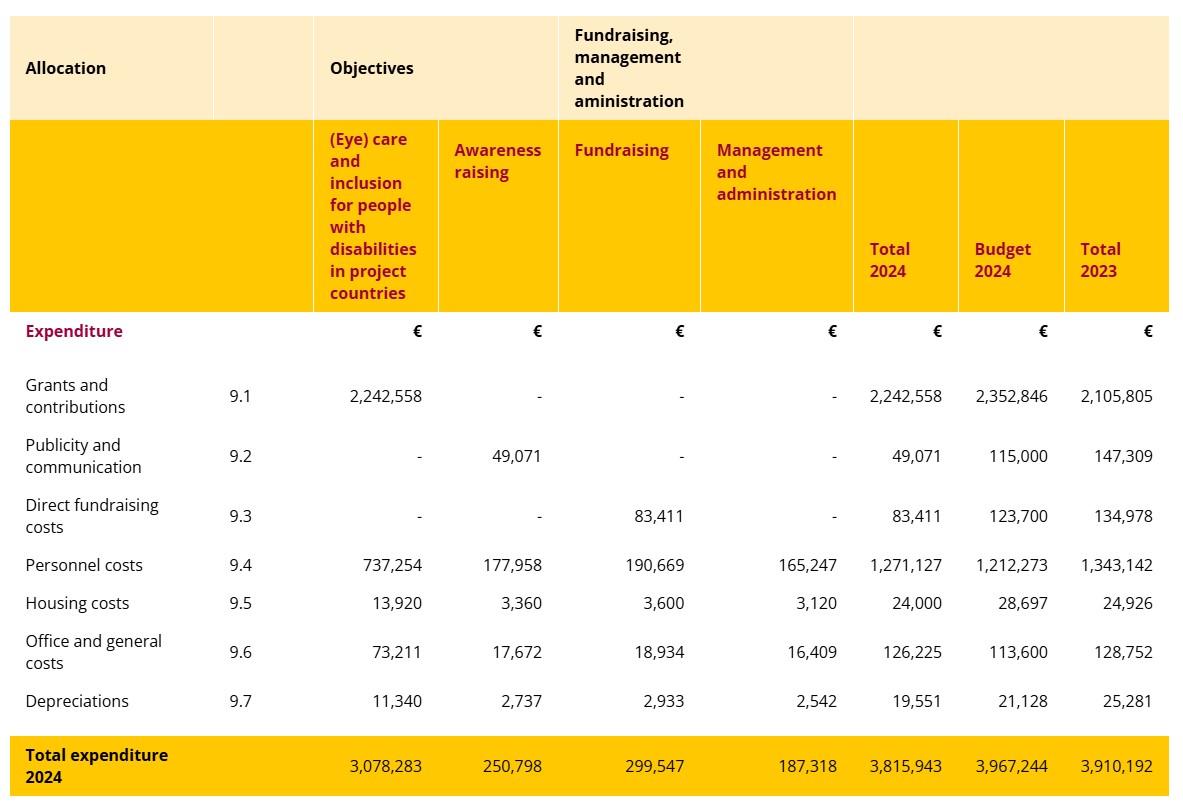
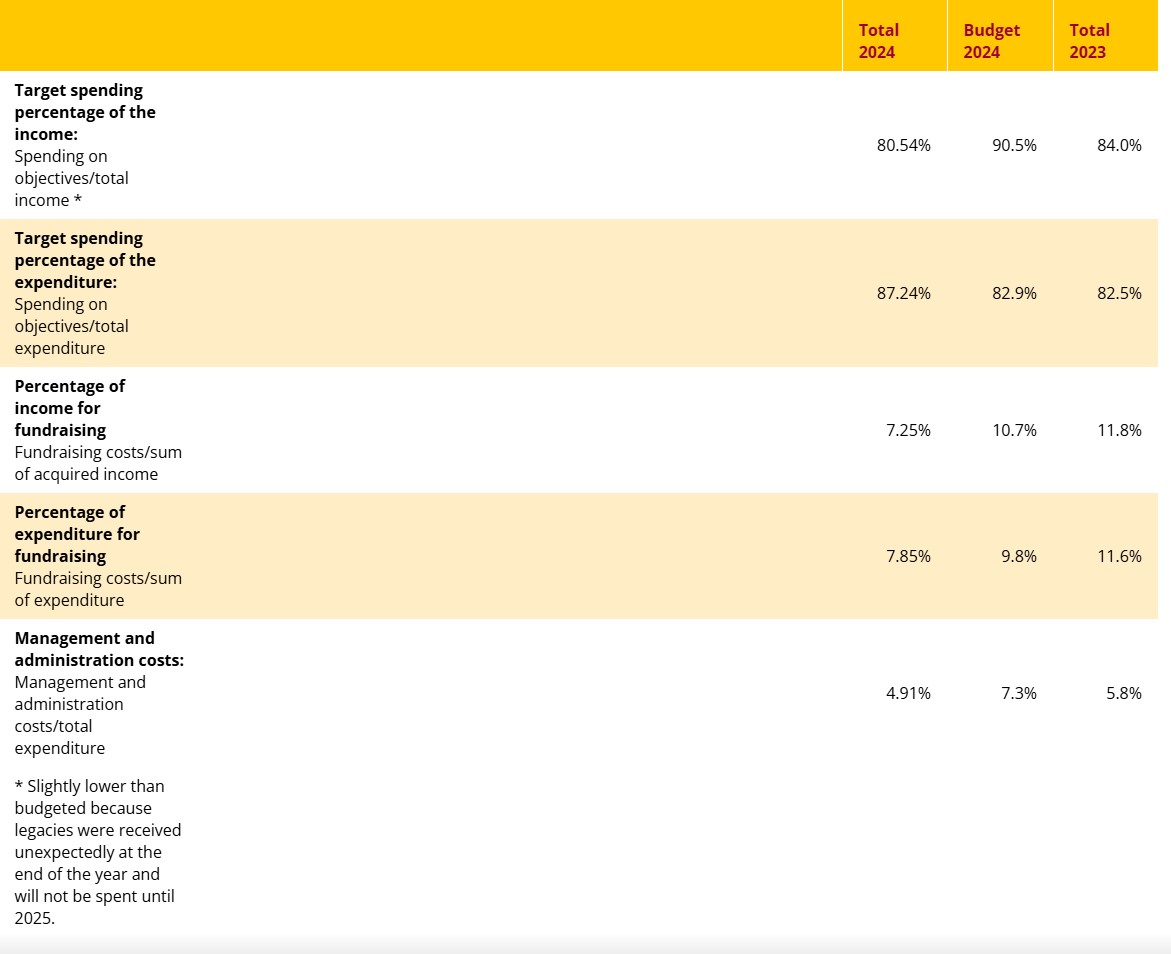
6. Accounting policies
General accounting policies
These financial statements have been prepared in accordance with Guideline 650 for Fundraising Organisations as set out in the Dutch Guidelines for Annual Reporting. The purpose of this Guideline is to provide insight into the costs of the organisation and how funds are spent in relation to the purpose for which those funds were collected. The financial statements are presented in euros.
As from December 2023, the SeeYou Foundation has been converted from a one-tier model to a two-tier model. There is a one-member management board (executive director).
Comparative figures
The comparative figures for 2024 have been adjusted where relevant for the purpose of comparison with the year under review.
Consolidation
The board of the SeeYou Foundation is also the board of the Open Oog Foundation. The financial statements of the SeeYou Foundation do not include any consolidated figures relating to the result and the equity of the Open Oog Foundation because the significance of this foundation is largely negligible.
Valuation policies
General valuation policies
Unless stated otherwise, assets and liabilities are recognised at amortised cost.
Currency translation
Transactions in foreign currency are initially recognised at the functional exchange rate on the date of the transaction. Monetary balance sheet items in foreign currency are translated at the functional exchange rate on the balance sheet date.
Exchange differences arising during the settlement or translation of monetary items in foreign currency are accounted for in the statement of income and expenditure.
Tangible fixed assets
The tangible fixed assets that are necessary for our objective and business operations are measured at cost less depreciation determined on the basis of the estimated useful life of the asset and taking into account any residual value. The depreciation amounts to a percentage of this cost.
Receivables, liquid assets, debts and accruals and deferrals
Receivables, liquid assets, debts and accruals and deferrals are measured at amortised cost less a provision for bad debts based on an individual assessment of the receivables.
Project liabilities are recognised based on a decision in that respect that is made known in writing to the recipient of the grant and are charged to the financial year in which the project activities must be carried out by the partner implementing the project.
Reserves and funds
Reserves are monies that are at the disposition of the Foundation. Designated reserves may be maintained by the board for a specific purpose.
Funds are monies that must be spent within the context of the objectives for which they were made available. This concerns the unspent part of earmarked donations and other funds recognised under income.
Provisions
Provisions are recognised when it is probable or certain that a liability will arise but for which the exact amount or the time of the outflow of the resources is unknown.
Accounting policies for determining the result
General accounting policies for determining the result
The result is determined as the difference between the income, all related costs, and other expenses attributable to the reporting year, with due observance of the aforementioned accounting policies.
Income
Income consists of all the proceeds attributable to the reporting year.
Legacies are recognised in the reporting year in which the size of the estate can be reliably determined, i.e., if the payment has been announced. Advances are recognised in the financial year in which they are received. In-kind donations are measured at fair market value.
Expenditure
Financial income and expenses consist of the interest income and expenses relating to the reporting period.
Employee remuneration
Salaries and social security costs are allocated to the reporting period in which they are due, in accordance with the employment contracts.
The Foundation has granted its employees a pension based on a career average scheme. The pension scheme is administered by the industry-wide pension fund Pensioenfonds Zorg en Welzijn.
The contributions due for the financial year are recognised as costs.
Contributions not yet paid by the balance sheet date are recognised as a liability. The risks of price indexation and investment return may lead to an adjustment of future contributions to Pensioenfonds Zorg en Welzijn.
These risks are not reflected in any provision in the balance sheet. In the event of a deficit at Pensioenfonds Zorg en Welzijn, the Foundation has no obligation to make additional contributions other than future higher contributions.
Pensioenfonds Zorg en Welzijn currently has a deficit. The fund reports the following:
The current funding position of the Dutch pension fund for the care and welfare sector (PFZW) rose in 2024 from 106.1% to 109.5%. The policy funding position fell from 112.0% to 108.9%. This decrease arose because the average of the current monthly funding positions in 2024 was lower than in 2023. The rise in the current funding position was mainly due to the investment results. With the investments, PFZW achieved an annual return of 7.7%. In 2024, the total capital invested rose from € 237.6 billion to € 258.6 billion.
Our policy concerning the reserves is further explained in the notes on the balance sheet (7.4). You can find an explanation of the Results in the Explanation (Sections 8 and 9) and in Section 11, Comparative analysis. The chapter Financial statements with the Annual Report 2024 provides more details about the financial policy and the results.
Cost allocation
Personnel costs, office accommodation costs, office and general costs and depreciation are divided between our objective, fundraising income, and management and administration.
7. Explanation of the balance sheet – Fixed assets
7.1 Tangible fixed assets
| 71 Tangible fixed assets | Buildings | Inventory & IT | Vehicles | Total |
|---|---|---|---|---|
| € | € | € | € | |
| Situation on 1 janaury 2024 | ||||
| Purchase value | 187,593 | 66,820 | - | 254,413 |
| Accumulated depreciation | -143,976 | -38,741 | - | -182,717 |
| 43,617 | 28,079 | - | 71,696 | |
| Changes in fiscal year 2024 | ||||
| Investments | - | 27,742 | - | 27,742 |
| Depreciations | -5,628 | -13,708 | - | -19,336 |
| Disposals | - | - | - | - |
| Cost of disposals | - | - | - | - |
| -5,628 | 14,034 | - | 8,406 | |
| Situation on 31 December 2024 | ||||
| Purchase value | 187,593 | 94,562 | - | 282,155 |
| Accumulated depreciations | -149,604 | -52,449 | - | -202,053 |
| 37989 | 42,113 | - | 80,102 | |
| Depreciations are calculated based on the following annual depreciation percentages: | ||||
| Buildings (excluding land) | 3% | |||
| Inventory and IT | 10% - 25% | |||
| Vehicles | 20% | |||
| WOZ building value reference date 1-1-2023 | 99,000 |
7.2 Explanation of the balance sheet – Financial assets
| 7.2 receivables | 2024 | 2023 |
|---|---|---|
| € | € | |
| Project contributions to be received | 69,622 | 136,836 |
| Prepaid project contributions | 83,174 | 155,150 |
| Legacies to be received | 198,624 | 482,132 |
| Other receivables | ||
| Contributions to be received | 2,824 | 2,571 |
| Accrued interest | 7,294 | 4,514 |
| Prepaid contributions | 9,615 | 2,517 |
| Total other receivables | 19,733 | 9,602 |
| Balance on 31 December | 371,153 | 783,720 |
| A provision for ineligibility is not considered necessary. |
7.3 Explanation of the balance sheet – Liquid assets
| 7.3 Liquid assets | 2024 | 2023 |
|---|---|---|
| € | € | |
| Cash | 1,770 | 1,080 |
| Bank account - current accounts | 1,622,846 | 1,311,226 |
| Bank account - US dollars | 977 | 897 |
| Bank account - savings | 1,511,296 | 1,192,204 |
| Balance on 31 December | 3,136,889 | 2,505,407 |
| The liquid assets are freely available. | ||
| The bank account in US dollars is valued according to the exchange rate on the balance date. |
7.4 Reserves and funds
| 7.4 Reserves and funds | 31-12-2024 | 31-12-2023 | ||
|---|---|---|---|---|
| Reserves | € | € | ||
| Continuity reserve | 1,070,140 | 960,137 | ||
| Emergency aid reserve | 75,000 | 75,000 | ||
| Mission implementation reserve 2021-2024 | - | 235,438 | ||
| Total | 1,145,140 | 1,270,575 | ||
| The development can be displayed as follows: | Balance on 1 Jan | Allocation of profits and/or losses allocation | Other changes | Balance on 31 dec |
| Continuity reserve | 960,137 | 110,003 | - | 1,070,140 |
| Emergency aid reserve | 75,000 | - | - | 75,000 |
| Mission implementation reserve 2021-2024 | 235,438 | -235,438 | - | - |
| Totaal | 1,270,575 | -125,435 | - | 1,145,140 |
The total reserves decreased slightly compared tot 2023 because in 2024, the mission implementation reserve 2021-2024 was entirely used.
The reserves are segmented according to the purpose for which the board has allocated the reserves. SeeYou adheres to a total reserve position with a minimal bandwidth of 100% of the organisation’s net costs. The Dutch charity sector association Goede Doelen Nederland recommends a maximum reserve of 150%. SeeYou remains well below this threshold. The net costs of the organisation include total costs minus the direct project costs and the costs of programme management attributable to the projects, and the overhead costs attributed to the projects.
7.4 Continiuty reserve
| 2024 | 2023 | |
|---|---|---|
| Continiuty reserve | € | € |
| Balance on 1 January | 960,137 | 1,271,687 |
| Change according to allocation of profits and/or losses | 110,003 | -311,550 |
| Balance on 31 December | 1,070,140 | 960,137 |
Although the overall reserves have descreased slightly, the continuity reserve has recovered somewhat from the decrease in 2023. This financial buffer to absorb shortfalls in income or unexpected costs and thus ensure the progress of the projects is essential and is seen as part of good governance.
SeeYou establishes the minimum size of the continuity reserve on the basis of a risk analysis. For this, the starting point is that this reserve must enable SeeYou to compensate for temporary financial setbacks in such a way that the projects can still continue to achieve their results or, in the most negative case, be completed in a good way. This ensures that donations continue to be well used even if there is a drop in income. It is important that SeeYou as an organisation can bridge a temporary period of lower financial icome and, where necessary, can also briefly support the partners if they experience a sudden loss of support. This stability enables our partners to work on building sustainable local capacity insted of manging ad hoc crises.
Global changes continue to have an impact on our sector. The donation behaviour of private individuals, companies, funds, foundations and governments is fluctuating. The continuity reserve enables SeeYou to remain resilient and to absorb fluctuations up to a certain extent so that we remain a stable partner for our partner organisations in Africa and Asia.
Earmarked reserves
Besides the continiuty reserve, SeeYou has also created the following earmarked reserves:
Earmarked funds at the end of 2024:
- Emergency aid reserve: € 75,000
- Mission implementation reserve 21-24: € 0
7.4 Emergency aid reserve
| 2024 | 2023 | |
|---|---|---|
| Emergency aid reserve | € | € |
| Balance on 1 January | 75,000 | 75,000 |
| Change according to allocation of profits and/or losses | - | - |
| Balance on 31 December | 75,000 | 75,000 |
The countries where we work with strategic partners are regularly affected by natural disasters, conflicts or other unexpected emergencies, such as the COVID-19 pandemic. We want to be able to provide emergency aid in those situations, provided that our strategic local or international partners have sufficient capacity to adequately provide this aid. A reserve has been set up to allow us to respond quickly in emergency situations and immediately start up and (pre)finance preliminary activities, regardless of fundraising. Any funds raised for this emergency aid then flow back into the reserve until the pre-financing level has been achieved once more. As a result, in the event of a new emergency response, money can again be quickly released and used for the benefit of victims of natural disasters, conflicts or other unexpected emergencies.
In 2024, no use was made of the emergency aid funds. The current level remains reserved for the purpose of this reserve.
7.4 Mission implementation reserve 2021-2024
| 2024 | 2023 | |
|---|---|---|
| Mission implementation reserve 2021-2024 | € | € |
| Balance on 1 January | 235,438 | 454,788 |
| Change according to allocation of profits and/or losses | -235,438 | -219,350 |
| Balance on 31 December | - | 235,438 |
The mission implementation reserve 21-24 was created in 2019 thanks to a legacy, and it was intended for the design and roll-out of our new strategy in our project countries in Africa and Asia, and the support this required from the Netherlands. The board established the substantive frameworks for this in 2020 and in summary the reserve was used in the period 2021-2024 to:
- Invest in the organisation to structurally increase the resource acquisition (own fundraising) by an average of 5% per year, which will make a structurally higher investment in our projects in Asia and Africa possible.
- Make it possible to reach a greater number of children and adults with a disability in Asia and Africa and thus achieving a greater impact on the lives of people with a visual impairment or other disability.
SeeYou is grateful for the financial space this legacy provided. In the multiannual planning it allowed us to include steps for building up our partnerships in Africa and Asia and strengthening the organisation.
For the year 2024, an amount of € 235,000 was budgeted. In the realisation of 2024, costs were calculated based on the frameworks stated and the amount of € 235,000 was fully used. Whit this, the reserve had been fully used by the end of 2024 in line with the multiannual budget.
7.4 Allocated funds
| 2024 | 2023 | |
|---|---|---|
| Allocated funds | € | € |
| Balance on 1 January | 606,163 | 157,598 |
| Change according to allocation of profits and/or losses | 418.,335 | 448,565 |
| Balance on 31 December | 1,024,498 | 606,163 |
On 31 December 2023, the balance of the allocated funds was amounted to € 606,103 in the allocated funds. With the exception of one project that started later, the funds were spent in their entirety in 2024. Income was received throughout the year in 2024, as a result of which, it was not always possible to spend the income received in the same financial year. Allocated resources still to be spent are accounted for in the allocated funds. In 2024, the balance of funds still te be spent rose considerably, partly due to a legacy that we received in December.
7.5 Provisions
| 2024 | 2023 | |
|---|---|---|
| Income payment obligation | € | € |
| Balance on 1 January | 275,788 | 280,419 |
| Endowment | 43,182 | 22,109 |
| Payments | -33,188 | -26,740 |
| Balance on 31 December | 285,782 | 275,788 |
This provision was formed as a result of an inheritance received. The SeeYou Foundation has undertaken to disburse money to the heirs of this estate. The payment is subject to various conditions, including indexation based on the Consumer Price Index. The provision is based on an actuarial calculation. In 2024, the actuarial interest rate was 3.300% (2023: 3.800%) based on the mortality table (male and female mortality between 2014-2019) method SRA.
7.6 Current liabilities
| 2024 | 2023 | |
|---|---|---|
| € | € | |
| Liabilities related to projects | ||
| Project obligations | 116,986 | - |
| Amount still to be settled with implementing partners | 88,956 | 235,127 |
| Amount received in advance from donors for ongoing projects | 632,547 | 656,801 |
| Amount received in advance for projects still to be started | 59,520 | 37,500 |
| 898,009 | 929,430 | |
| Taxes and social security contributions | ||
| Payroll tax and social security conributions to be paid | 53,198 | 54,337 |
| Pension contribution to be paid | 41,936 | 39,647 |
| Balance on 31 December | 95,134 | 93,984 |
| Other current liabilities personnel | ||
| Provision for holiday pay including social security contributions | 31,384 | 32,912 |
| Provision for end-of-year bonus | 8,107 | |
| Provision for annual leave | 38,975 | 65,620 |
| Other liabilities personnel | - | - |
| 78,466 | 98,532 | |
| Other liabilities | ||
| Account payable | 37,725 | 78,520 |
| Othe current liabilities | 23,384 | 8,045 |
| 61,109 | 86,565 | |
| Balance on 31 December | 1,132,718 | 1,208,511 |
7.7 Rights and abligations not included in the balance sheet
Multiannual financial obligations
For the lease of the office a lease agreement has been concluded that runs from 1 August 2022 to the end of July 2027. The rent is indexed each year based on the Consumer Price Index (CPB). The total of the lease instalments that expire after the balance sheet date amounts is approximately € 41,200 – € 12,300 = € 28,900 (price level 2024).
For the lease of the office a lease agreement (per year) has been concluded. The total of the lease instalments that expire after the balance sheet date amounts to approximately € 12,972.
Conditional advances
If partners do not spend all of the project funds allocated in the project period concerned, this constitutes underspending. SeeYou Foundation then has the conditional right to reclaim these funds.
Underspending, after this has been determined and made known to the partner, is usually settled with the following agreed upn project period.
7.8 Events after the balance sheet date
These are uncertain times across the world. The effects of the uncertainty in the world, rising prices and changing choices from governments have not escaped the attention of our supporters and donors. For example, there are several military, economic and political conflicts, we are facing the consequences of climate change, and the Dutch government support for international collaboration is decreasing. With effect from 2025, the Dutch government will reduce the budget for devolopment cooperation. For the period 2026-2030 this will be reduced from 1.4 billion euros to about 390 to 565 million, which is a reduction of about 1 billion euros over a five-year period.
At the start of 2025, support from the US humanitarion and development organisation USAID suddenly stopped. Although this will not directly affect our organisation in the short term, it could well affect our partners. In addition to this, our partners in Rwanda are also affected by a decision from the Belgian government, which means it will with immediate effect stop funding NGOs in Rwanda. The consequences of this decision will probably become clearer later this year.
8. Explanation of the income
| Realisation 2024 | Budget 2024 | Realisation 2023 | |
|---|---|---|---|
| 8.1 Income from individuals | € | € | € |
| Individuals | 417,221 | 430,000 | 438,310 |
| Major donors | 375,000 | 150,000 | 275,000 |
| 175,000 | 100,000 | 175,000 | |
| 200,000 | 50,000 | 100,000 | |
| Legacies and estates | 760,957 | 250,000 | 455,693 |
| 1,553,178 | 830,000 | 1,169,003 | |
| 8.2 Income from companies | € | € | € |
| Companies | 95,673 | 100,000 | 83,323 |
| Opticians | 3,008 | 3,000 | 4,242 |
| 98,681 | 103,000 | 87,565 | |
| 8.3 Grants from governments | € | € | € |
| Dutch Ministry of Foreign Affairs: We Are Able! | 1,055,428 | 1,026,002 | 1,103,282 |
| Europese Unie: MUB | 151,141 | 197,288 | 1,902 |
| 1,206,569 | 1,223,290 | 1,105,184 | |
| 8.4 Income from other not-for-profit organisations | € | € | € |
| Funds and foundations | 1,154,231 | 1,340,000 | 1,054,182 |
| Churches | 53,834 | 70,000 | 69,022 |
| Schools | 600 | 2,500 | 630 |
| Service clubs | - | 3,000 | 3,000 |
| EO Metterdaad | 63,917 | 63,984 | 62,427 |
| Other donors | - | - | 288,013 |
| 1,272,582 | 1,479,484 | 1,477,274 | |
| 8.5 Other income | € | € | € |
| Miscellaneous | 2,580 | - | 1,124 |
Part of our income is derived from regular support and therefore somewhat predictable. Examples are companies that have supported us for a number of years or private individuals who support us via direct debit. By comparison, 27% of the income from private individuals is structural in nature and the remainder of the gifts from private individuals is uncertain.
The income from other non-profit organisations mainly relates to project contributions on an annual basis. The programme We are Able! (2021-2025) and the EU-funded MUB (2023-2026) are part of grants from governments.
9. Explanation of the expenditure
| Realisation 2024 | Budget 2024 | Realisation 2023 | |
|---|---|---|---|
| Region/country | |||
| Africa | 2,413,659 | 2,564,098 | 2,146,322 |
| Africa region | - | - | - |
| Ethiopia | 632,760 | 692,259 | 681,188 |
| Uganda | 376,284 | 368,528 | 352,267 |
| Rwanda | 837,133 | 963,003 | 484,557 |
| Sudan | 290,092 | 289,657 | 345,881 |
| South Sudan | 277,390 | 250,651 | 282,429 |
| Asia | 277,354 | 303,844 | 218,772 |
| Cambodia | 75,356 | 55,000 | 112,607 |
| Indonesia | 201,998 | 248,844 | 106,165 |
| NLD | 127,382 | 103,832 | 267,226 |
| The Netherlands | 127,382 | 103,832 | 267,226 |
| Total | 2,818,395 | 2,971,774 | 2,632,320 |
| Charged on project costs | |||
| Salary costs charged to projects | -265,448 | -235,782 | -339,194 |
| Organisation costs charged to projects | -310,389 | -383,146 | -187,321 |
| -575,837 | -618,928 | -526,515 | |
| Net grants and contributions to partners for realised projects | 2,242,558 | 2,352,846 | 2,105,805 |
The charged project costs consist of direct project costs (e.g. travel or evaluations), the costs for programme management directly attributable to the projects and the organisational costs allocated to the project.
9.2 Publicity and communication
| Realisation 2024 | Budget 2024 | Realisation 2023 | |
|---|---|---|---|
| € | € | € | |
| 9.2 Publicity and communication | |||
| Publicity and communication | 13,767 | 40,000 | 19,599 |
| Awareness raising | 26,452 | 60,000 | 86,944 |
| Other | 8,852 | 15,000 | 40,766 |
| Total Publicity and communication | 49,071 | 115,000 | 147,309 |
| 9.3 Direct fundraising costs | |||
| Mailings and marketing | 66,718 | 88,000 | 104,913 |
| Miscellaneous fundraising costs | 16,693 | 35,700 | 30,068 |
| Total direct fundraising costs | 83,411 | 123,700 | 134,978 |
| 9.4 Personnel costs | |||
| Salaries | 764,419 | 785,230 | 658,775 |
| Social security contributions | 130,472 | 136,253 | 136,815 |
| Pensions | 78,452 | 86,541 | 81,495 |
| Sick leave insurance | 52,694 | 56,000 | 25,786 |
| Travel costs | 11,113 | 9,500 | 8,335 |
| International travel costs | 1,580 | 2 | 9,985 |
| Recruitment and hiring | 25,204 | 5,000 | 5,526 |
| Training and development | 8,698 | 10,000 | 5,229 |
| Hiring external expertise | 208,549 | 100,000 | 386,918 |
| Other personnel costs | -10,054 | 23,750 | 24,278 |
| Total personnel costs | 1,271,127 | 1,212,276 | 1,343,142 |
The costs for Publicity & Communication and for Fundraising remained well below the budgeted amount due to changes and understaffing in the teams concerned.
As part of the measures to further increase our efficiency, the number of employees (in FTE) was reduced to11.65 (2023: 12.75 and 2022: 15.26) throughout the financial year 2024. The total personnel costs fell compared tot 2023 because over the course of the year it was possible to strongly reduce the number of independent professionals we used.
The item Other personnel costs has de deficit of € -10.054, because part of the reserve for leave days was no longer required due to the departure of a few members of staff.
The costs for the executive director are accounted for under heading 10, Salaries.
Members of the Supervisory Board receive no remuneration for their work. No loans, advances or guarantees were provided to beard members during the year under review.
9.5 Housing costs
| Realisation 2024 | Budget 2024 | Realisation 2023 | |
|---|---|---|---|
| € | € | € | |
| 9.5 Housing costs | |||
| Rent for office space Vendelier 15 in Veenendaal | 12,311 | 12,647 | 11,497 |
| Water and energy costs | 4,045 | 5,000 | 3,206 |
| Other housing costs | 7,644 | 11,050 | 10,223 |
| Total housing costs | 24,000 | 28,697 | 24,926 |
| 9.6 Office and general expenditure | |||
| IT costs | 48,688 | 43,700 | 51,559 |
| Bank fees | 6,065 | 8,500 | 7,227 |
| Accountants costs | 31,302 | 28,000 | 28,492 |
| Other | 40,170 | 33,400 | 41,474 |
| 126,225 | 113,600 | 128,752 | |
| 9.7 Depreciation costs | |||
| Buildings | 5,628 | 5,628 | 5,628 |
| Inventory & IT | 13,923 | 15,500 | 19,653 |
| Vehicles | - | - | - |
| Total depreciation costs | 19,551 | 21,128 | 25,281 |
| 9.8 Financial income and expenditure | |||
| -24,744 | -2,000 | 12,290 | |
| Total financial income and expenditure | -24,744 | -2,000 | 12,290 |
In 2024, the accommodation costs were lower than budgeted. Due to inflation and a strong increase in energy prices in 2022, we allowed for considerably higher costs in the budget. In 2023, we initiated savings measures, such as a strict office policy with respect to occupancy and the heating of office spaces and closing the office one day a week. We continued with these measures in 2024.
The office and general costs are more or less the same as in the previous year. However, they are slightly higher than budgeted, which is partly due to updates to our CRM software and the general price increases for services.
De kantoor en algemene kosten zijn ongeveer gelijk aan vorig jaar. Wel iets hoger dan begroot, bijvoorbeeld kosten van IT zijn hoger door updates van CRM-software en de kantoorkosten door algemene prijsstijgingen van services.
10. Salaries
| Realisatie 2024 | ||
|---|---|---|
| 10. Salaries | ||
| Ms D.J. Nieuwenhuis | ||
| Position: Executive Director | ||
| Contract | ||
| Type (duration) | Indefenute | |
| Hours per week | 32 | |
| Part-time percentage | 88,89 | |
| Period | from | 01-jan |
| to | 31-dec | |
| Annual remuneration | € | |
| Gross salary | 82,021 | |
| Holiday pay | 10,565 | |
| End-of-year bonus | 6,917 | |
| Length of service bonus and payment of annual leave not taken | 4,741 | |
| Annual income | 104,244 | |
| Taxable allowances/additions | - | |
| Pension expenditure (employer's part) | 10,209 | |
| Pension compensation | - | |
| Other long-term remuneration | - | |
| Benefits upon termination of employment | 16,000 | |
| Total remuneration 2024 | 130,453 | |
| Total remuneration 2023 | 108,795 | |
| Per1 december 2024:D | ||
| Ms J.G.H. Omvlee | ||
| Position: Executive Director | ||
| Contract | ||
| Type (duration) | Definite | |
| Hours per week | 24 | |
| Part-time percentage | 66,67 | |
| Period | From | 1-dec |
| To | 31-dec | |
| Annual remuneration | € | |
| Gross salary | 4,861 | |
| Holiday pay | ||
| End-of-year bonus | 435 | |
| Annual income | 5,296 | |
| Pension expenditure (empoyer's part) | 640 | |
| Total remuneration 2024 | 5,936 | |
| Total remuneration 2023 | n.v.t. | |
Executive director’s salary
The executive director’s annual salary (as an employee) remains below the maximum of € 129,292 (1 FTE/12 months, 1 July 2024), which is in line with the Dutch base score for executive positions (BSD) score of 380 points according to the Regulation on salaries for directors of charity organisations.
The total salary (including annual income, taxable allowances/additions, pension expenses, pension compensation and other long-term remunerations) also remains below the regulated maximum of € 160,322 that has applied since 1 July 2024.
For a more detailed explanation of the organisation’s management and guidelines for the executive director’s salary, please see the chapter Board and Supervision in the Annual Report 2024.
According to the Regulation on salaries for directors of charity organisations an annual income includes a
standard annual income:
– Gross salary/salary
– Holiday pay
– Fixed end of year bonus
– Other possible benefits such as a length of service bonus or remuneration for annual leave days not taken.
N.B. When calculating the annual income, employer contributions (e.g. pension costs) are not taken into account.
11. Comparative analsis budget and realisation
| Realisation 2024 | Budget 2024 | Difference 2024 | Realisatie 2023 | |||
|---|---|---|---|---|---|---|
| Income | ref. | € | € | € | € | |
| Income from induviduals | 8.1 | 1,553,178 | 830,000 | 723,178 | 187% | 1.169.003 |
| Income from companies | 8.2 | 98,681 | 103,000 | -4,319 | 96% | 87.565 |
| Grants from governments | 8.3 | 1,206,569 | 1,223,290 | -16,721 | 99% | 1.105.184 |
| Income from toher not-for-profit organisations | 8.4 | 1,272,582 | 1,479,484 | -206,902 | 86% | 1.477.274 |
| Other income | 8.5 | 2,580 | - | 2,580 | 1.124 | |
| Total income | 4,133,590 | 3,635,774 | 497,816 | 114% | 3.840.150 | |
| Expenditure | ||||||
| Grants and contributions | 9.1 | 2,242,558 | 2,352,846 | -110,288 | 95% | 2.105.805 |
| Publicity and communication | 9.2 | 49,071 | 115,000 | -65,929 | 43% | 147.309 |
| Direct fundraising costs | 9.3 | 83,411 | 123,700 | -40,289 | 67% | 134.978 |
| Personnel costs | 9.4 | 1,271,127 | 1,212,273 | 58,854 | 105% | 1.343.142 |
| Housing costs | 9.5 | 24,000 | 28,697 | -4,697 | 84% | 24.926 |
| Office and general expenditure | 9.6 | 126,225 | 113.,600 | 12,625 | 111% | 128.752 |
| Depreciations | 9.7 | 19,551 | 21,128 | -1,577 | 93% | 25.281 |
| Sum of expenditure | 3,815,943 | 3,967,244 | -151,301 | 96% | 3.910.193 | |
| Balance financial income and expenditure | 9.8 | 24,744 | -2,000 | 26,744 | 12.290 | |
| Profit/loss | 292,900 | -329,470 | 622,373 | -82.332 |
Income
The total SeeYou income in 2024 was € 4,133,590. This is 14% higher than budgeted.
- The income from private individuals included legacies and individual donations. Due to several legacies in particular, the income from private individuals is higher (87%) than budgeted.
- The revenue from companies also rose compared to 2023.
- The revenue from government grants rose slightly compared to 2023. This cencerns multiannual projects where the expenditure can fluctuate between years.
- The income from other non-for-profit organisations was 14% lower than budgeted. In particular the results of the segment Funds and Foundations fell and remained below the level of 2023 due to the loss of a project and the associated donor.
Expenses
The total expenses in 2024 of € 3,815,943 remained slightly below the budget due to saving in fundraising and communication and a temporary shortage of personnel, as a result of which not all of the planned activities could be realised.
In 2024, we were able to devote 87.2% to our objective (2023: 82.5%) by spending relative less on fundraising, and management and administration. Of the 87.2%, 80.7% was spent on projects for inclusive development, strengthening the rights of people with disabilities, and eye care worldwide; 6.5% was spent on awareness-raising and educational activities concerning the need for inclusive development in development cooperation.
Managing the organisation’s costs remains an important goal so that as much of our income as possible is used in our porject countries. In previous years, absence due to illness and labour market shortages meant that SeeYou had to hire independent professionals. The number of independent professionals we hired could be reduced in the course of 2024. Despite rising salary costs in general, the rise of these costs remained limited at SeeYou because in consultation with the staff, we relinquished the link with te collective labour agreement with effect from 2024. Insted, we now weigh market and wage trends against the available resources.
You can read more about the cost and income indicators in the chapter on Finances in the annual report.
Signature by the Supervisory Board and Executive Board
The original annual accounts have been signed by the Managing Director and the members of the Supervisory Board.
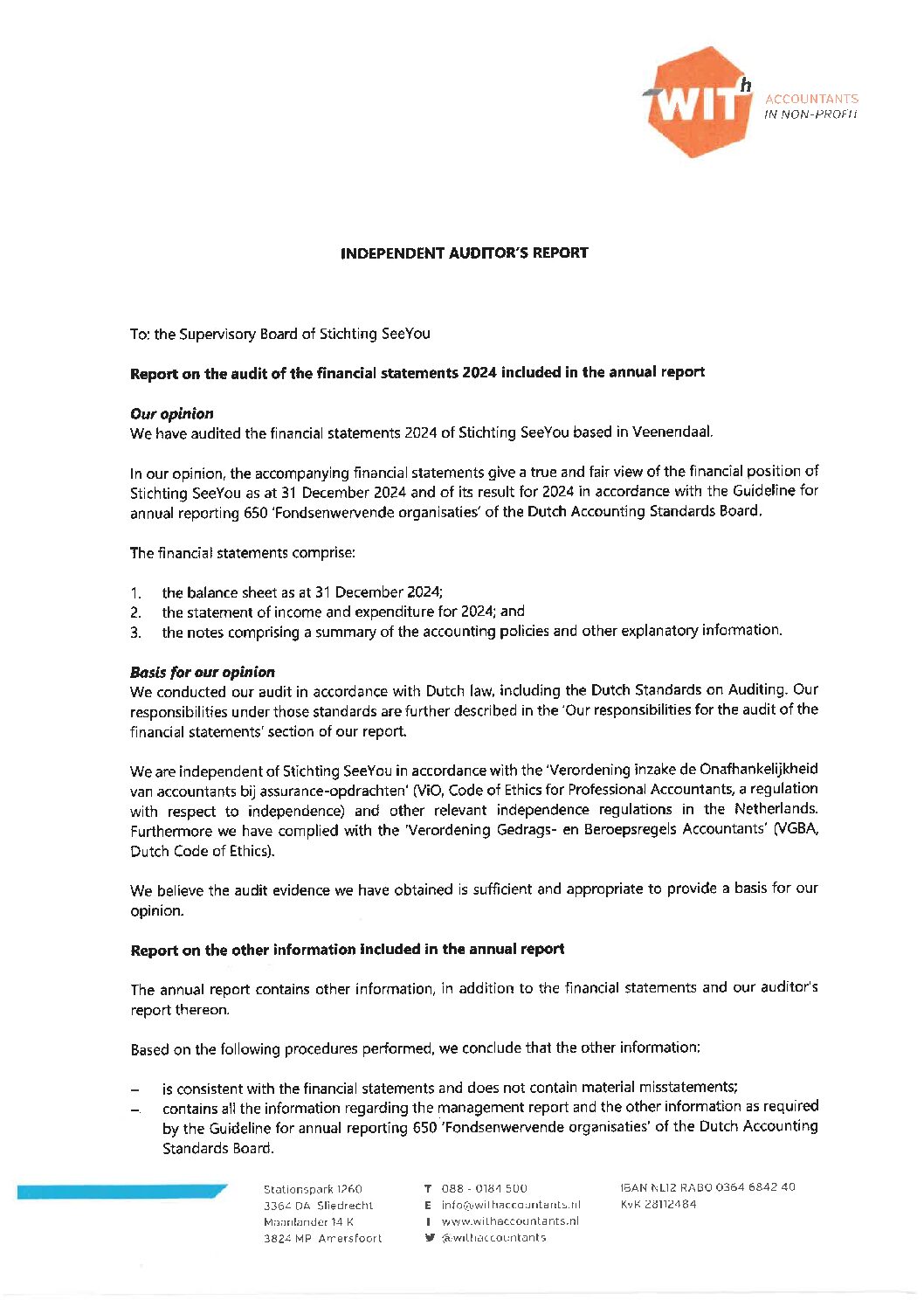

Annex budget
| Budget 2025 | Realisation 2024 | Budget 2024 | |
|---|---|---|---|
| € | € | € | |
| Income | |||
| Income from individuals | 786,375 | 1,553,178 | 830,000 |
| Income from companies | 249,500 | 98,681 | 103,000 |
| Grants from governments | 1,073,934 | 1,206,569 | 1,223,290 |
| Income from associated not-for-profit organisations | - | - | - |
| Income from other not-for-profit organisations | 1,398,427 | 1,272,582 | 1,479,484 |
| Income in return for the provision of services | - | - | - |
| Other income | 11,000 | 2,580 | - |
| Total income | 3,519,236 | 4,133,590 | 3,635,774 |
| Expenditure | |||
| Spent on objectives | |||
| Participation of people with disabilities in developing countries | 3,233,770 | 3,078,283 | 2,066,530 |
| Awareness raising and education | 249,780 | 250,789 | 223,349 |
| 3,483,550 | 3,329,081 | 3,289,879 | |
| Fundraising | |||
| Fundraising costs | 358,214 | 299,547 | 388,875 |
| Management and administration | |||
| Management and administrations costs | 243,230 | 187,318 | 288,491 |
| Sum of expenditure | 4,084,994 | 3,815,946 | 3,967,245 |
| Balance before financial income and expenditure | -565,758 | 317,644 | -331,471 |
| Balance financial income and expenditure | 10,000 | -24,744 | 2,000 |
| Profit/loss | -555,758 | 292,900 | -329,471 |
| Target spending percentage of the income Speding on objectives/total income | 99.0% | 80.5% | 90.5% |
| Target spending percentage of the expenditure Speding on objectives/total expenditure | 85.3% | 87.2% | 82.9% |
| Percentage of icome for fundraising Fundraising costs/sum of acquired income | 10.2% | 7.2% | 10.7% |
| Percentage of expenditure for fundraising Fundraising costs/sum of expenditure | 8.8% | 7.8% | 9.8% |
| Management and administration costs Management and administration costs/total expenditure | 6.0% | 4.9% | 7.3% |
The budget for 2025 assumes an expected income of more than 3.5 million. The percentages remain at a favourable level compared with sector benchmarks. SeeYou strives to raise funds in a timely manner so that we can safeguard continiuty in the project countries. As a result of this approach, funds for projects are often received in the current year and spent in the following year. These funds are visible as allocated funds. This has a strong influence on the target spending percentage of income. In 2024, this was slightly lower than the previous year (80.5% in 2024 and 84% in 2023 due to a large proportion of legacies that were not spent anymore in 2024. This can be seen in the higher target spending percentage (99%) of the budget in 2025.
The budget assumes expected, new sources of income. There are also project funds (legacies) from 2024, the allocated funds. The budget shortfall in the balance of profits and losses of € -555,758 will be covered by these allocated funds.
The government grant WaA! was still more than 1 million euro in 2024 but, as planned, will decrease in 2025 to more than € 800,00 and then it will stop. With that, about one-quarter of the current programme portfolio will come to an end. That could require an organisational change. We will map the potential 2026 portfolio and strive to realise a growth in the portfolio so that the total volume and the organisation costs will remain the same.